
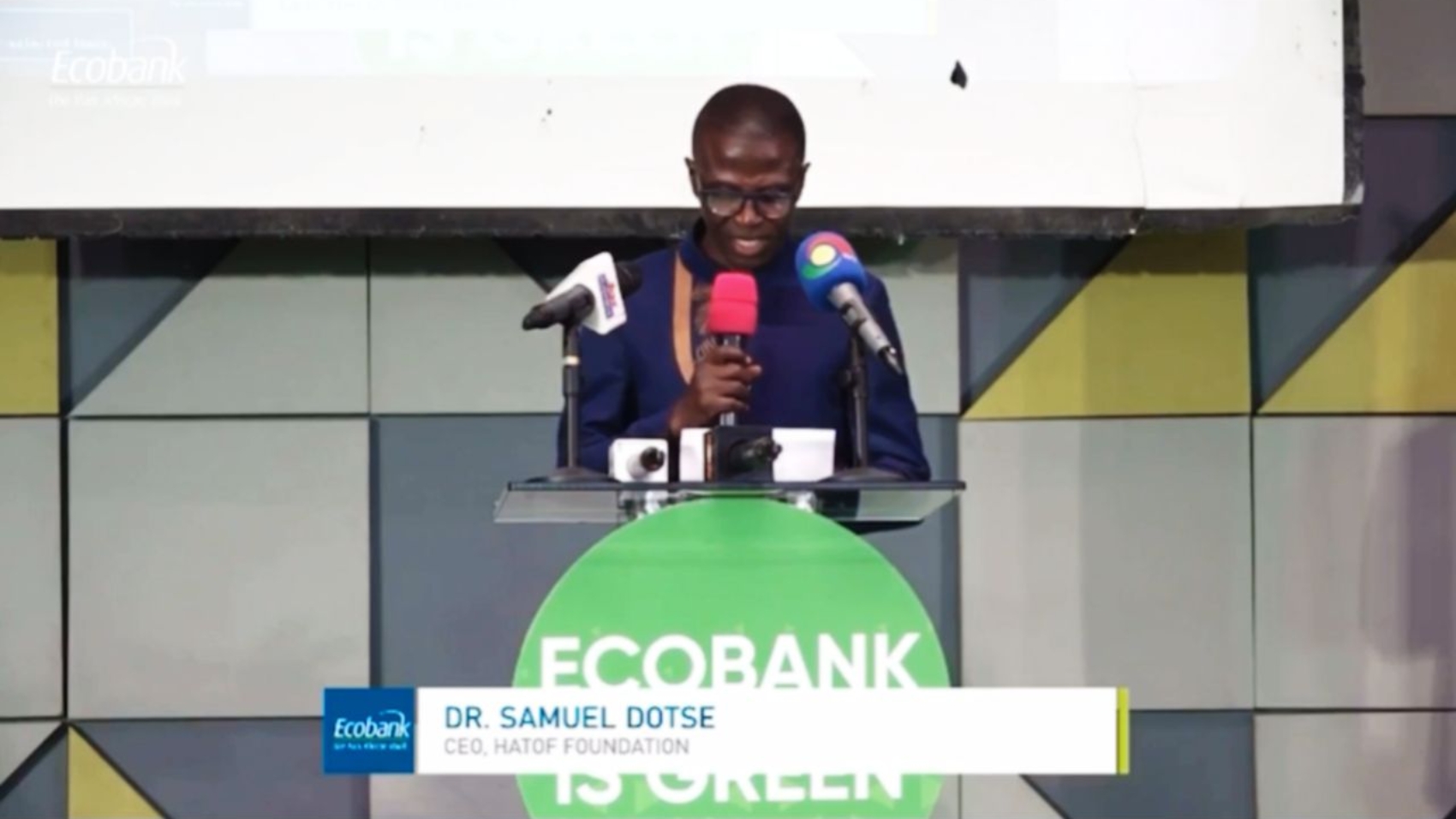
Honourable Guests, Distinguished Partners, Ladies and Gentlemen,
It is both an honour and a profound responsibility to speak today on behalf of Civil Society Organisations as we mark the launch of the Accelerating Solar Action Program (ASAP)— a milestone not only for Ecobank Ghana but for Ghana’s sustainable development journey.
ASAP is not merely another development intervention. It represents a bold, strategic step forward in Ghana’s climate and energy transition journey – signalling Ghana’s readiness to align policy, finance, and implementation to expand access to clean, affordable energy—especially for underserved households, MSMEs, and productive sectors.
Like many developing economies, Ghana faces a dual challenge: reducing the growing impacts of climate change while ensuring that all citizens enjoy equitable access to reliable energy. Our reliance on fossil fuel-based thermal generation continues to expose us to GHG emissions and economic volatility. Renewable energy—though rich in potential—still lags in mainstream deployment.
ASAP marks a turning point, seeking to scale distributed solar power solutions, enable productive energy use, and unlock new opportunities for growth, resilience, and low-carbon development.
But ladies and gentlemen, beyond policy and infrastructure, people remain at the heart of this mission.
For the micro-entrepreneur facing high energy costs, for the irrigation cooperative dealing with power reliability issues, and for the youth pursuing green job opportunities—ASAP provides potential solutions and opportunities. And it is here that civil society’s role becomes critical.
As CSOs, we are the bridge between planning and participation, between financing and lived experience. We play a vital role in ensuring that awareness creation, capacity building, and local engagement are inclusive and effective. We must also champion transparency—ensuring that the program is implemented with strong environmental and social safeguards, and that vulnerable groups, particularly women and off-grid communities, are not left behind.
I am particularly proud to reflect on the long-standing collaboration between Ecobank and HATOF Foundation. I had the opportunity to support the development of the Bank’s GCF Accredited Entity Work Programme—a pivotal instrument that has helped shape its climate finance direction and align with national priorities. I also had the privilege of providing pro-bono advisory services during the Bank’s accreditation process, which successfully positioned Ecobank as Ghana’s first GCF-accredited financial institution.
Moreover, I was pleased to recommend and facilitate the participation of civil society organizations in the Bank’s maiden Sustainability Week Celebration in March 2024—an event that reflected Ecobank’s openness to inclusive dialogue and reinforced the critical role of CSOs in climate governance and policy influence.
I wish to commend Ecobank Ghana for the deliberate inclusion of community voices and local context in this journey. Looking ahead, HATOF Foundation and our civil society partners remain committed to supporting the rollout of ASAP in collaboration with Ecobank Ghana, the Energy Commission, the Ministry of Finance, and other stakeholders.
Together, we must ensure this becomes a replicable model that not only contributes to our NDCs and the Renewable Energy Master Plan but also accelerates progress toward universal energy access by 2030.
Let me conclude by saying this: the climate crisis demands more than policy—it demands partnerships, leadership, and sustained commitment. ASAP represents all three. I encourage all stakeholders—government, private sector, CSOs, and communities—to rally behind this landmark initiative and ensure its success across Ghana and beyond.
Thank you, and congratulations once again to Ecobank Ghana on this historic achievement.
