
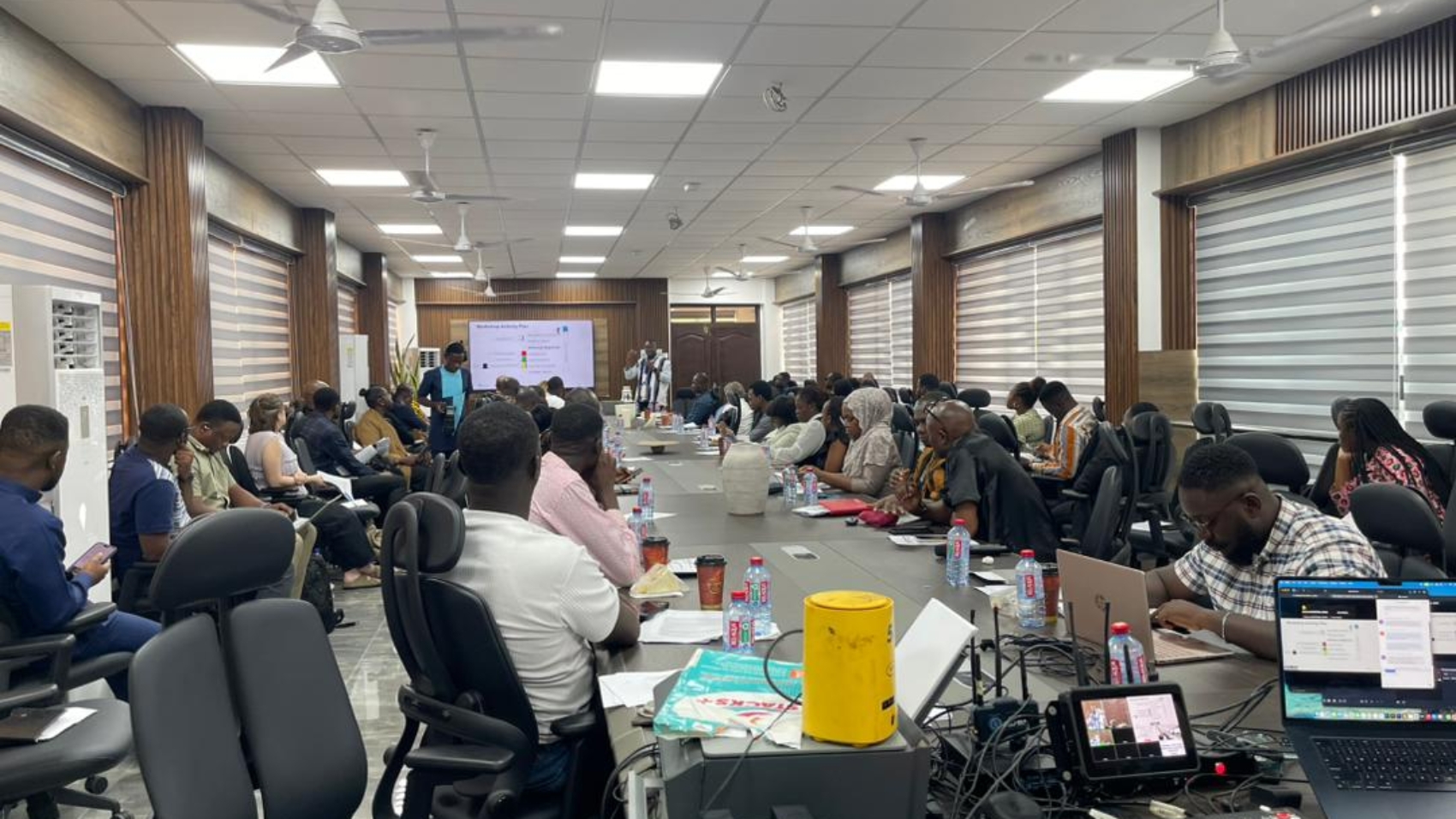
HATOF Foundation participated in a workshop on Ghana’s Supply Side Regulation for Electric Vehicles, organised by the Regional Centre for Energy and Environmental Sustainability (RCEES) at the University of Energy and Natural Resources (UENR) under the Moving Impact Project.
The workshop, held on 2 March 2026 at the Ministry of Transport in Accra, brought together policymakers, researchers, development partners, private sector actors, and civil society organisations from Ghana and the United Kingdom to discuss strategies for advancing electric mobility across Sub-Saharan Africa.
HATOF Foundation was represented at the workshop by its Senior Programmes, Partnerships and Climate Change Officer, reaffirming the organisation’s continued engagement in climate policy dialogue, sustainable mobility initiatives, and green development advocacy.
Strengthening Ghana’s Electric Mobility Ecosystem
The workshop provided a platform for stakeholders to examine Ghana’s emerging electric mobility landscape and the policy frameworks being developed to support the transition to cleaner transport systems.
Participants discussed the growing importance of electric mobility in addressing environmental challenges, particularly the transport sector’s contribution to greenhouse gas emissions. With the transport sector accounting for a significant share of energy-related emissions in Ghana, the adoption of electric vehicles (EVs) presents an opportunity to reduce emissions, improve air quality, and strengthen energy efficiency.
Presentations during the workshop highlighted Ghana’s early progress in developing an electric vehicle market, including increasing registration of electric vehicles such as plug-in hybrid vehicles, battery electric vehicles, and electric two-wheelers.
Policy and Regulatory Developments
A key focus of the workshop was Ghana’s National Electric Vehicle Policy, which outlines the country’s vision for promoting the adoption and utilisation of safe, affordable electric vehicles.
The policy seeks to promote sustainable EV demand, strengthen EV supply chains, support research and innovation, develop human capital, and position Ghana as a potential hub for lithium-ion battery production. It also proposes a phased implementation strategy aimed at gradually increasing electric vehicle penetration across the national vehicle fleet.
Participants also discussed proposed Supply-Side Regulations, including the introduction of a Zero-Emission Vehicle (ZEV) Sales Standard, which would require vehicle importers and manufacturers to include a minimum percentage of zero-emission vehicles in their sales portfolios. The regulation is expected to support the steady supply of cleaner vehicles and prevent Ghana from becoming a destination for high-emission vehicles.
Infrastructure and Investment Opportunities
The workshop further explored the infrastructure and investment requirements necessary to support the growth of electric mobility in Ghana.
Stakeholders highlighted the need to expand EV charging infrastructure across the country, including public charging stations in urban centres, charging networks along major transport corridors, and battery-swapping facilities.
Discussions also identified several opportunities for private sector investment within the EV ecosystem, including vehicle assembly, battery production and recycling, charging infrastructure development, and software platforms for fleet and charging management.
In addition, participants explored innovative financing mechanisms that could support the transition to electric mobility, including the potential establishment of a Green Transport Development Fund to finance infrastructure development, research, and incentives for EV adoption.
Advancing Sustainable Transport in Ghana
The workshop underscored the importance of coordinated policy frameworks, regulatory reforms, and private sector participation in accelerating the adoption of electric mobility.
For HATOF Foundation, participation in the workshop provided valuable insights into emerging opportunities within Ghana’s sustainable transport sector and reinforced the organisation’s commitment to supporting climate-friendly development pathways.
HATOF Foundation continues to engage in national and international policy dialogues that contribute to climate action, sustainable energy systems, and environmentally responsible development in Ghana and across Africa.