C50A2006

HATOF Foundation and SOVODEG Sign MoU to Advance Climate Action and Community Development in Southern Volta

In a significant step toward deepening collaborative climate resilience efforts, HATOF Foundation has officially signed a Memorandum of Understanding (MoU) with the Southern Volta Development Group (SOVODEG).

The MoU, signed on the 8th of July, 2025, formalizes the cooperation between HATOF and SOVODEG with a long term vision to support the protection and improvement of the marine and coastal environment, enhance the active and effective participation of the Southern Volta communities in national and global climate action and promote sustainable socio-economic development by leveraging business opportunities.

This partnership reflects a mutual commitment to strengthening environmental governance and advancing inclusive development models tailored to local contexts through joint projects focused on:

  • Climate change adaptation and mitigation,
  • Sustainable livelihoods,
  • Community-led conservation, and
  • Knowledge-sharing and advocacy.

“This is more than a formal agreement; it is a promise to communities that we are working together to ensure they thrive in the face of climate risks,” said by Dr. Samuel Dotse (PhD), speaking on behalf of HATOF Foundation.

We look forward to the impactful journey ahead with SOVODEG and remain committed to scaling solutions that bridge environmental protection with social and economic transformation.


WhatsApp Image 2025-07-01 at 12.06.38 PM

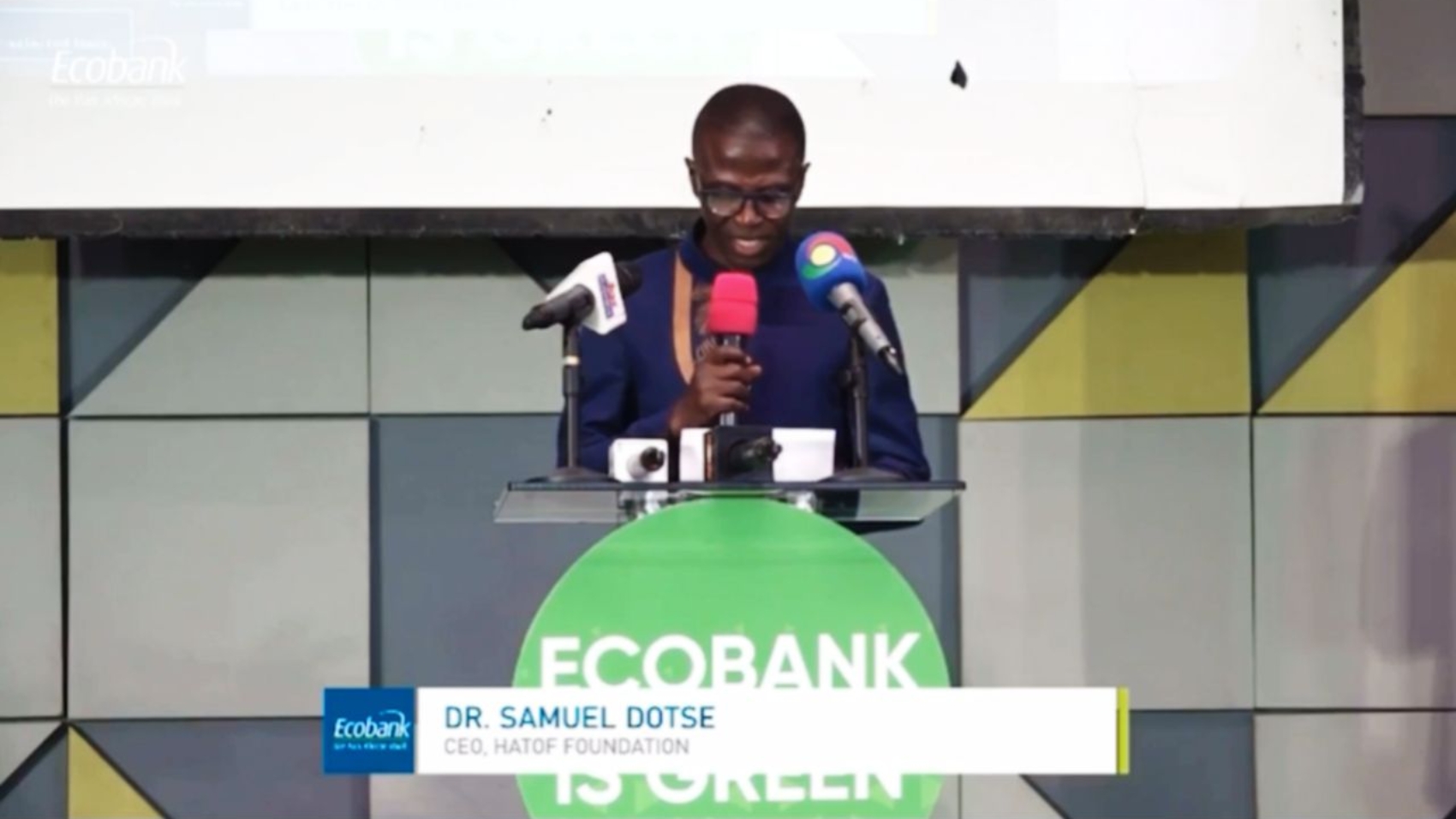
REMARKS BY DR. DOTSE, CEO OF HATOF FOUNDATION, AT THE LAUNCH OF THE ACCELERATING SOLAR ACTION PROGRAM (ASAP), ECOBANK HEADQUARTERS, ACCRA, JUNE 30, 2025

Honourable Guests, Distinguished Partners, Ladies and Gentlemen,

It is both an honour and a profound responsibility to speak today on behalf of Civil Society Organisations as we mark the launch of the Accelerating Solar Action Program (ASAP)— a milestone not only for Ecobank Ghana but for Ghana’s sustainable development journey.

ASAP is not merely another development intervention. It represents a bold, strategic step forward in Ghana’s climate and energy transition journey – signalling Ghana’s readiness to align policy, finance, and implementation to expand access to clean, affordable energy—especially for underserved households, MSMEs, and productive sectors.

Like many developing economies, Ghana faces a dual challenge: reducing the growing impacts of climate change while ensuring that all citizens enjoy equitable access to reliable energy. Our reliance on fossil fuel-based thermal generation continues to expose us to GHG emissions and economic volatility. Renewable energy—though rich in potential—still lags in mainstream deployment.

ASAP marks a turning point, seeking to scale distributed solar power solutions, enable productive energy use, and unlock new opportunities for growth, resilience, and low-carbon development.

But ladies and gentlemen, beyond policy and infrastructure, people remain at the heart of this mission.

For the micro-entrepreneur facing high energy costs, for the irrigation cooperative dealing with power reliability issues, and for the youth pursuing green job opportunities—ASAP provides potential solutions and opportunities.  And it is here that civil society’s role becomes critical.

As CSOs, we are the bridge between planning and participation, between financing and lived experience. We play a vital role in ensuring that awareness creation, capacity building, and local engagement are inclusive and effective. We must also champion transparency—ensuring that the program is implemented with strong environmental and social safeguards, and that vulnerable groups, particularly women and off-grid communities, are not left behind.

I am particularly proud to reflect on the long-standing collaboration between Ecobank and HATOF Foundation. I had the opportunity to support the development of the Bank’s GCF Accredited Entity Work Programme—a pivotal instrument that has helped shape its climate finance direction and align with national priorities. I also had the privilege of providing pro-bono advisory services during the Bank’s accreditation process, which successfully positioned Ecobank as Ghana’s first GCF-accredited financial institution.

Moreover, I was pleased to recommend and facilitate the participation of civil society organizations in the Bank’s maiden Sustainability Week Celebration in March 2024—an event that reflected Ecobank’s openness to inclusive dialogue and reinforced the critical role of CSOs in climate governance and policy influence.

I wish to commend Ecobank Ghana for the deliberate inclusion of community voices and local context in this journey. Looking ahead, HATOF Foundation and our civil society partners remain committed to supporting the rollout of ASAP in collaboration with Ecobank Ghana, the Energy Commission, the Ministry of Finance, and other stakeholders.

Together, we must ensure this becomes a replicable model that not only contributes to our NDCs and the Renewable Energy Master Plan but also accelerates progress toward universal energy access by 2030.

Let me conclude by saying this: the climate crisis demands more than policy—it demands partnerships, leadership, and sustained commitment. ASAP represents all three. I encourage all stakeholders—government, private sector, CSOs, and communities—to rally behind this landmark initiative and ensure its success across Ghana and beyond.

Thank you, and congratulations once again to Ecobank Ghana on this historic achievement.
CALL FOR FINANCIAL MANAGEMENT PROPOSAL IMAGE

Call for Proposal: Financial Management System Setup

HATOF Foundation invites qualified consulting firms to submit proposals for the Licensing and Setup of a Complete Financial Management System to strengthen financial management, transparency, and IFRS-compliant reporting.


Assignment Overview

Project: Financial Management System Setup
Location: HATOF Foundation, Tema-Ghana
Duration: August 25 – October 11, 2025

The selected firm will deliver a fully functional, customized financial management system supporting fund and grant management, donor reporting, budgeting, multi-currency transactions, project tracking, and automated financial reporting.


Scope of Work (Summary)

The Consulting firm will be responsible for delivering a complete and fully functional financial management system for HATOF Foundation, in line with the scope of work. This will include:

  • Conducting a detailed kick-off meeting with HATOF Foundation to understand current accounting processes, operational needs, and reporting requirements.
  • Reviewing existing financial records and recommending the most suitable setup and configuration.
  • Installing, configuring, and customizing financial management modules to meet HATOF’s requirements.
  • Setting up a system within the financial management system for HATOF to manage and disburse funds, and act as an intermediary for sub-grantees when required.
  • Migrating historical financial data into the system so that HATOF can generate key financial statements, including income statements, statements of financial position, equity statements, cash flow statements, and notes to accounts.
  • Configuring automated financial reports to meet IFRS and donor requirements.
  • Setting up and managing user permissions to ensure data security.
  • Providing training sessions to equip HATOF staff with the skills to independently operate and manage the system.
  • Testing the system for accuracy, completeness, and functionality before handover.
  • Offering post-implementation technical support to resolve any issues and ensure smooth operation.
  • Download TOR

Key Deliverables

  • Inception Report outlining the agreed setup plan and timeline.
  • Fully functional financial management system customized to HATOF’s needs.
  • Migration of agreed historical data.
  • User training sessions for HATOF staff.
  • User manual for basic system operations.
  • Post-implementation technical support.

Eligibility

Firms should demonstrate experience in financial system implementation, IFRS-compliant reporting, and NGO or donor-funded project accounting.


How to Apply

Submit a technical and financial proposal, and sample work


Deadline & Submission

Deadline: 31st July 2025
Email: ghanainfo@hatof.org
Subject: Proposal – Financial Management System Setup

PHOTO-2025-06-04-20-56-16

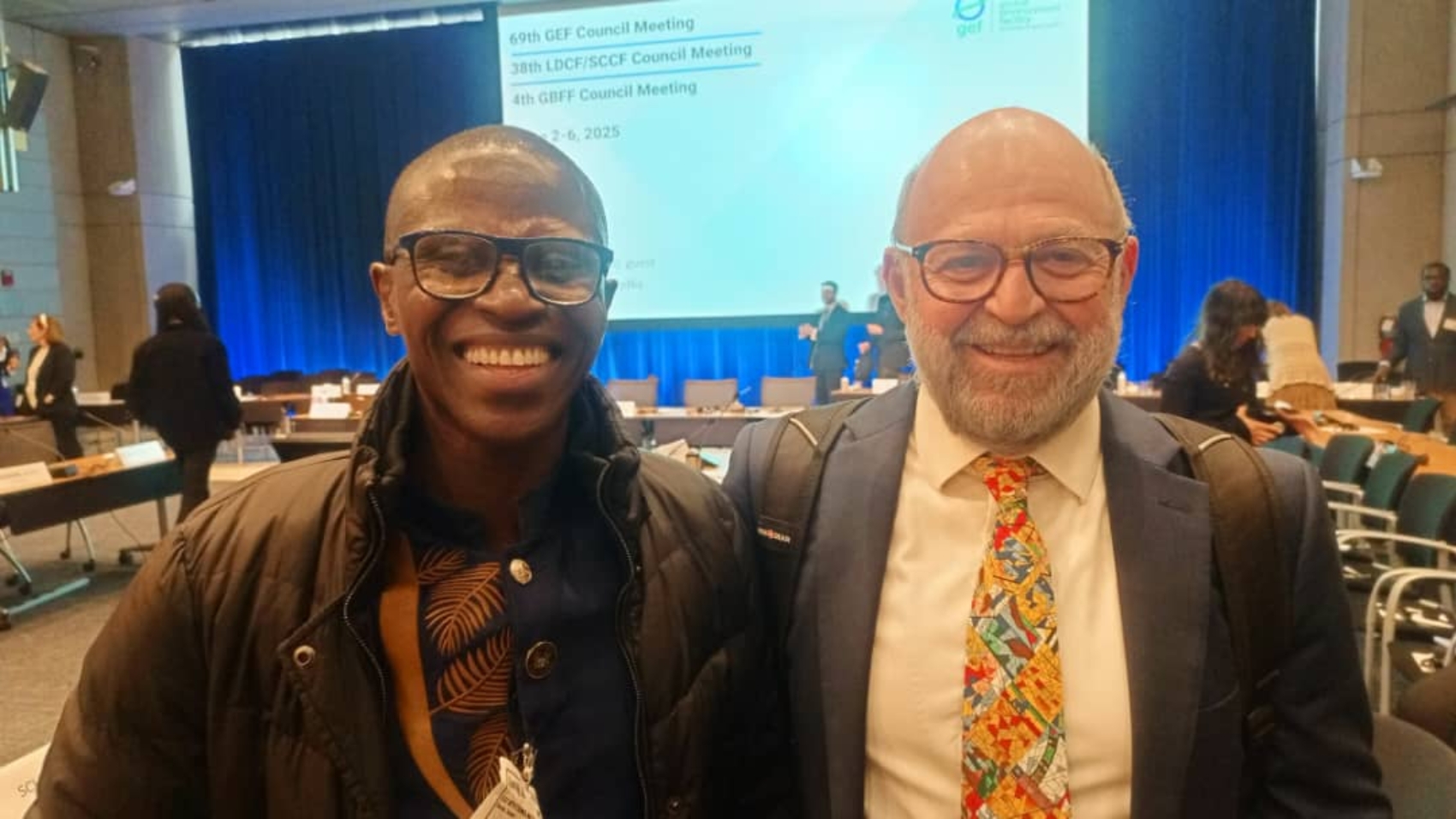
Dr. Samuel Dotse Champions Climate Action and Financial Mobilization at the 69th GEF Council Meeting in Washington, D.C. USA

Washington, D.C., June 4, 2025 — Global environmental financing is taking center stage this week at
the 69th Session of the Global Environment Facility (GEF 69) Council Meeting, where USD$261
million is being allocated to innovative, transformative programs addressing biodiversity
conservation, pollution remediation, and locally led environmental actions. Amid the high-level
gathering of environmental leaders and decision-makers, Dr. Samuel Dotse, CEO of HATOF
Foundation and Laureate of Distinction in Climate Change, is making strategic waves.
Attending the Council meeting at the invitation of Carlos Manuel Rodriguez, the GEF CEO and Chair
of the Secretariat, Dr. Dotse is actively advocating for ambitious climate financing, forging
important international partnerships, and elevating Ghana’s visibility within the global
environmental financing dialogue. His presence underscores the importance of inclusive,
transparent, and well-financed environmental governance in addressing both national and global
environmental challenges.
Beyond the Council floor, Dr. Dotse is officially invited to speak at the Climate Investment Funds
(CIF) 2025 Observer Onboarding Workshop at the World Bank Office in Washington, where he will
deliver insights on enhancing transparency in the governing bodies of Multilateral Climate Funds
and the crucial role observers play in strengthening accountability and institutional transparency.
In a series of high-level bilateral meetings, Dr. Dotse is also engaging with the Adaptation Fund
Secretariat, CIF leadership, and Multilateral Accredited Entities and development partners to
secure targeted funding for climate resilience, biodiversity conservation, and sustainable land
management in Ghana.
Out of the $261 million up for disbursement at the Council, $195 million is earmarked for projects
focused on eliminating toxic substances from from cosmetic products and industrial
processes, support collaboration across international waterways, and propel a variety of
locally led environmental efforts, including through microfinance. Additionally, the Global
Biodiversity Framework Fund (GBFF) is considering $26 million in grants to scale up biodiversity
protection efforts and community well-being programs across multiple countries.
Dr. Dotse’s strategic engagement comes at a pivotal time, as the GEF Council reviews progress
toward key global environmental goals and aligns funding strategies with the evolving mandates of
multilateral environmental conventions.


About the Global Environment Facility (GEF):
The GEF is the world’s largest multilateral fund supporting developing countries, including Ghana in
meeting global environmental commitments. It serves as the financial mechanism for several key
environmental conventions, including the UN Framework Convention on Climate Change
Convention, UN Convention on Biological Diversity, Convention to Combat Desertification,
Stockholm Convention on Persistent Organic Pollutants, Minamata Convention on Mercury, and the
Biodiversity Beyond National Jurisdiction (BBNJ). The GEF comprises 186 member countries, and its
Council—made up of 32 representatives from developed, developing, and transitional
economies—meets twice yearly to set policies, review progress, and approve funding for
environmental projects.
About the Global Biodiversity Framework Fund (GBFF):

Launched in 2023, the GBFF supports developing nations in implementing the Kunming-Montreal
Global Biodiversity Framework with strategic focus on strengthening national-level biodiversity
management, planning, policy, governance, and finance approaches. With $202 million already
committed across 41 countries, the GBFF aims to drive national-level biodiversity policies and
planning to meet the ambitious goal of living in harmony with nature by 2050. Ghana is yet to
benefit from the GBFF.

ChatGPT Image May 4, 2026, 04_19_32 PM

INVITATION TO SUBMIT PROPOSAL FOR EXTERNAL AUDIT

The Executive Council of HATOF Foundation is pleased to invite esteemed firms to submit a proposal for the provision of external audit services for the 2024 financial year.

We are seeking the services of a qualified, reputable, and independent audit firm with the professional competence, technical expertise, and integrity to conduct a comprehensive, objective audit of our financial statements and related records in accordance with applicable auditing standards and regulatory requirements.

Kindly ensure that your proposal includes the following:

  • Firm profile and relevant experience
  • Proposed audit approach and methodology
  • Team composition and key personnel
  • Work plan and timeline
  • Financial proposal and fee structure
  • Copies of relevant licenses, registrations, and certifications
  • References from similar assignments

Please submit your proposal to ghanainfo@hatof.org by November 22, 2024.

We appreciate your interest in this opportunity and look forward to receiving your proposal.