SHAPING GHANA'S CONSTITUTION

Shaping Ghana’s Constitution: Moving Environmental Protections from Aspiration to Enforceable Law

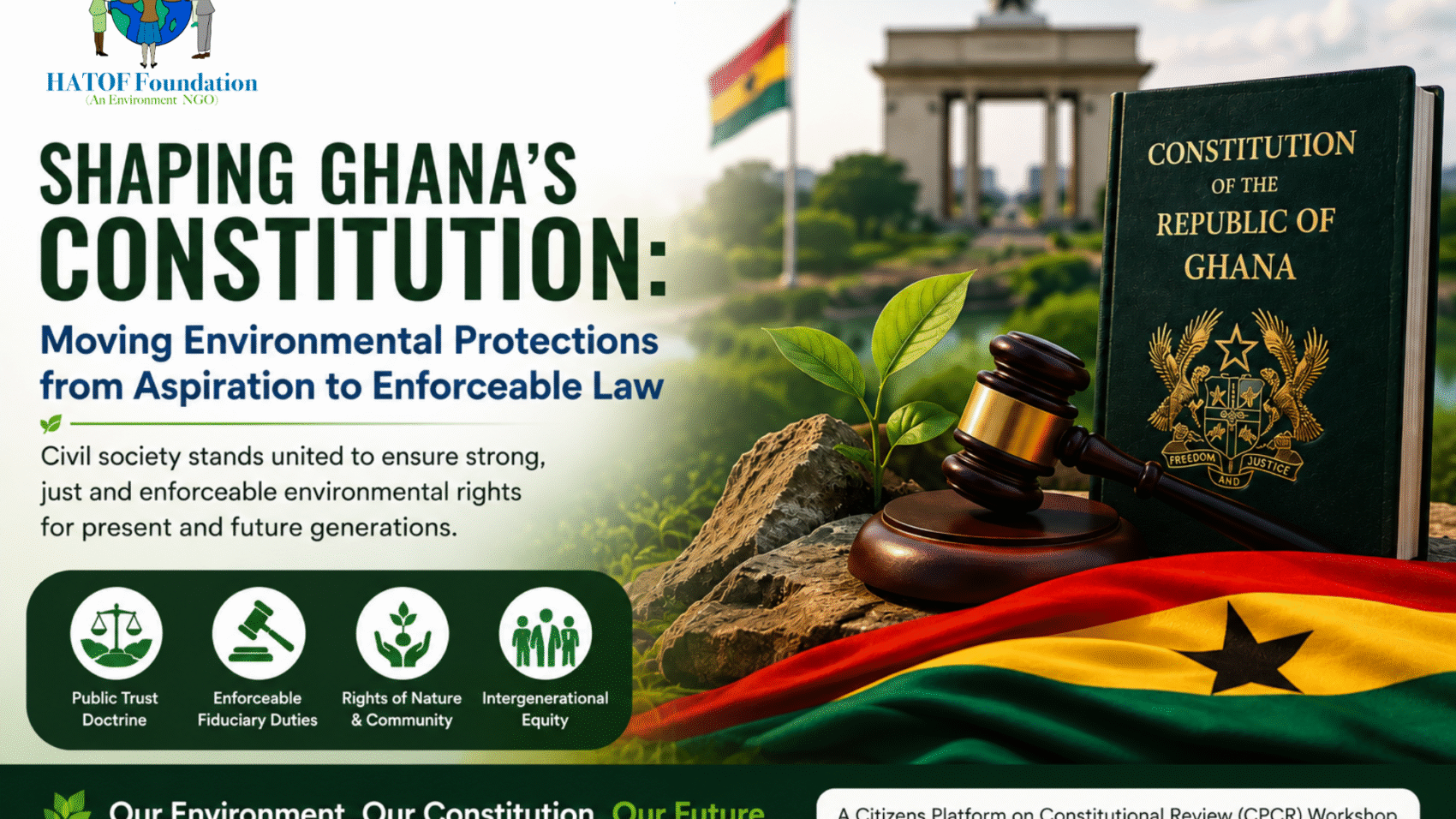
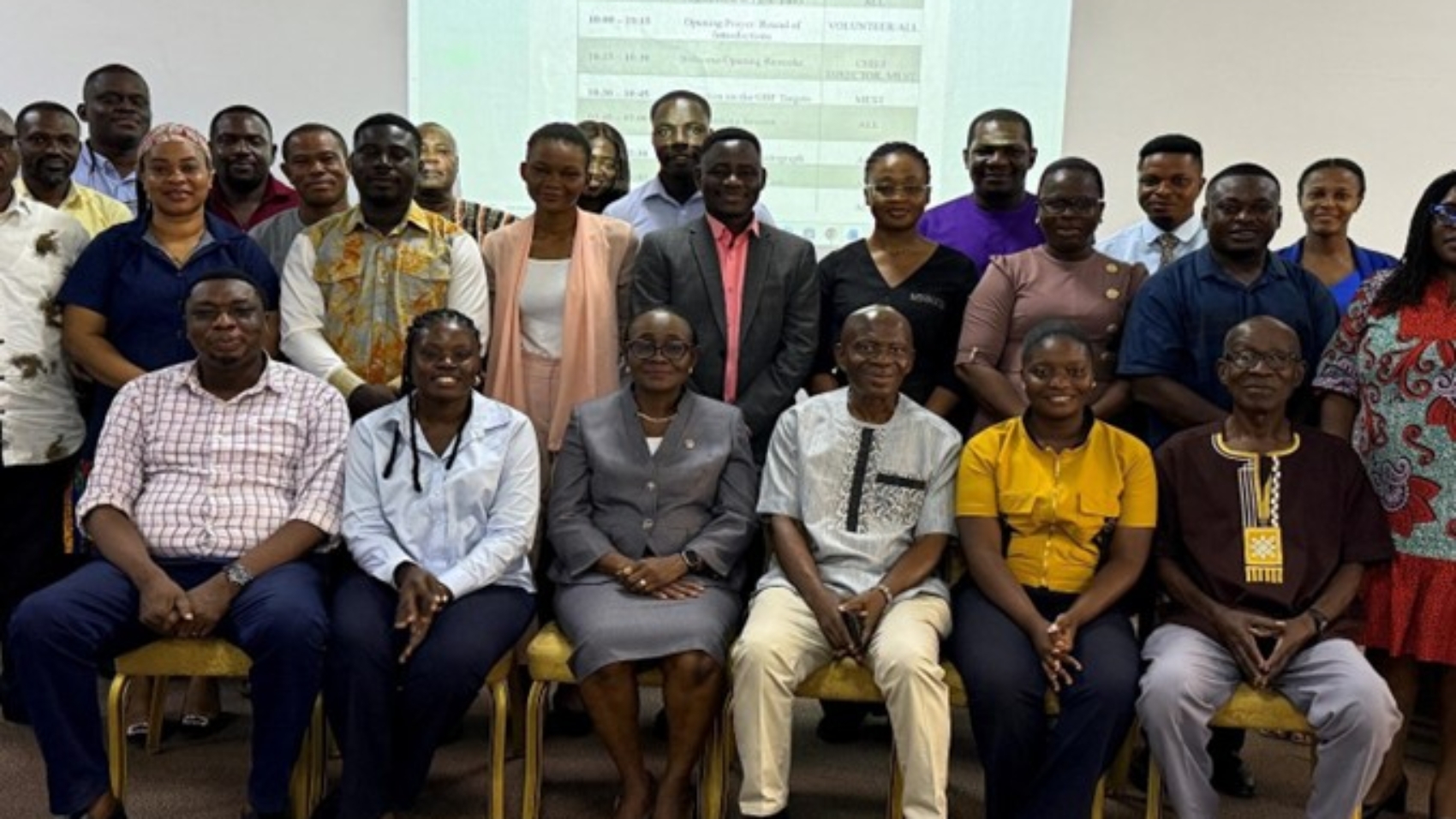
Accra, Ghana. June 17, 2026. Civil Society Organizations (CSOs) working across Ghana’s environment, conservation, and natural resource governance space convened at the Oak Plaza Hotel in Accra on Tuesday,16th June,2026, to deliberate on the environmental dimensions of the ongoing constitutional review process. The workshop formed part of the broader work of the Citizens Platform on Constitutional Review (CPCR), an initiative facilitated by Coalition for Constitutional Democracy (CDD)-Ghana, STAR-Ghana Foundation, and Democracy Hub, in partnership with A Rocha Ghana, and convened to ensure that citizens, rather than political actors alone, help shape the country’s third major attempt at constitutional reform, and HATOF Foundation was at the table. The discussions were anchored in the work of the Constitutional Review Committee (CRC), appointed by President Mahama in January 2025, whose report, released in January 2026, proposes the most far-reaching environmental reforms in the country’s constitutional history.

The recommendations include a Public Trust Doctrine, making the State a trustee, not an owner, of natural resources, binding government by law to manage Ghana’s lands, water, minerals, and biodiversity for present and future generations. This means government becomes legally accountable for how it manages those resources, not just politically answerable; enforceable fiduciary binding public authorities to act with transparency, sustainability, and intergenerational equity in all resource decisions – duties that citizens could challenge in court if breached; a new constitutional offence of ecocide with stiff sanctions, which is a significant departure from the administrative penalties that exist today; and stronger community rights through Free, Prior and Informed Consent. Under the current 1992 Constitution, Article 36(9) makes environmental protection non-justiciable, meaning no citizen can sue government for failing to protect the environment. These proposals change that fundamentally by converting environmental stewardship from a political promise into a legal obligation.

HATOF Foundation brought two critical perspectives to the room. Dr. Samuel Dotse, HATOF’s Chief Executive Officer, urged participants to move past treating biodiversity as an economic asset and recognize its right to thrive independent of market value. The organization’s Biodiversity Policy and Program Officer, Ms. Nyuiemedi Dzramado, flagged a gap: while the reform language is detailed on minerals and community dividends, it says almost nothing about access and benefit-sharing over genetic resources, an obligation Ghana has already taken on under the Nagoya Protocol to the Convention on Biological Diversity.

The outcome of this constitutional moment will shape how Ghana manages its forests, water, minerals, and biodiversity for generations to come, and civil society’s voice in the room is what will determine whether that outcome is worth having.
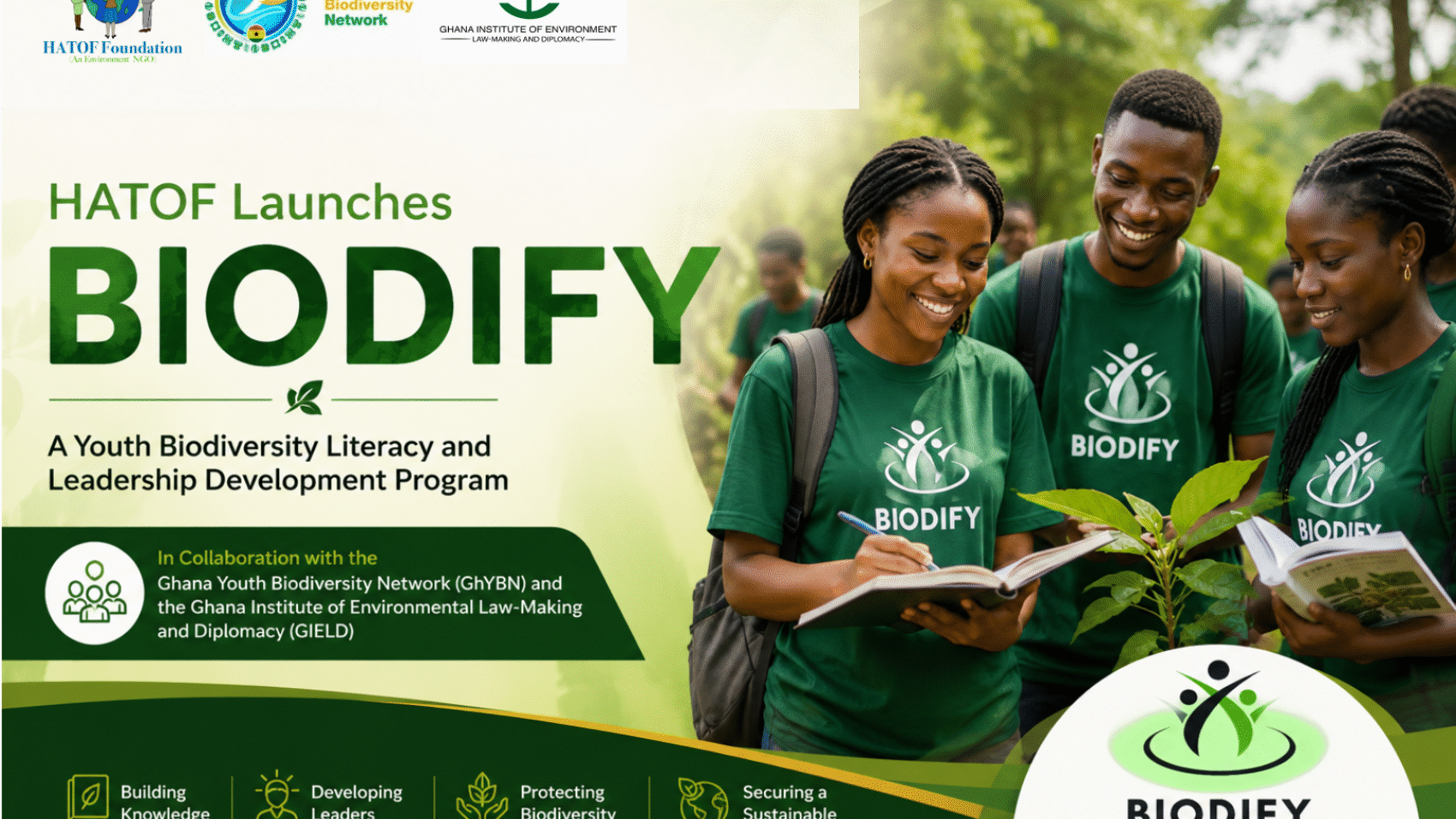
BIODIFY LAUNCH IMAGE

HATOF Launches BIODIFY: A Youth Biodiversity Literacy and Leadership Development Program in Collaboration with the Ghana Youth Biodiversity Network and the Ghana Institute of Environmental Law-Making and Diplomacy

April 9, 2026

Accra, Ghana

Recognizing the growing need to equip young people with the knowledge, skills, and networks required to address the biodiversity crisis, HATOF Foundation, in collaboration with the Ghana Youth Biodiversity Network (GhYBN) and the Ghana Institute of Environmental Law-Making and Diplomacy (GIELD), launched BIODIFY – a Biodiversity Literacy and Leadership Development Program.

BIODIFY was established to strengthen youth capacity in biodiversity conservation, environmental governance, policy engagement, and youth environmental leadership. The program seeks to bridge the gap between biodiversity science, policy, and practice by creating a structured learning platform that empowers young people to become informed advocates, practitioners, and leaders in the biodiversity space.
At a time when biodiversity loss continues to threaten ecosystems, livelihoods, food security, and climate resilience, meaningful youth participation in environmental decision-making has become increasingly important. BIODIFY responds to this need by providing participants with access to expert knowledge, practical learning experiences, mentorship opportunities, and a growing community of biodiversity champions.

The program offers a comprehensive learning journey covering key thematic areas, including biodiversity fundamentals; biodiversity governance, including the Convention on Biological Diversity (CBD) and the Kunming-Montreal Global Biodiversity Framework; National Biodiversity Strategies and Action Plans (NBSAPs); biodiversity finance; ecosystem services; and nature-based solutions.

Through interactive sessions facilitated by leading experts, participants are exposed to contemporary biodiversity issues while developing the critical thinking and leadership skills needed to contribute effectively to conservation and sustainable development efforts at local, national, and international levels.

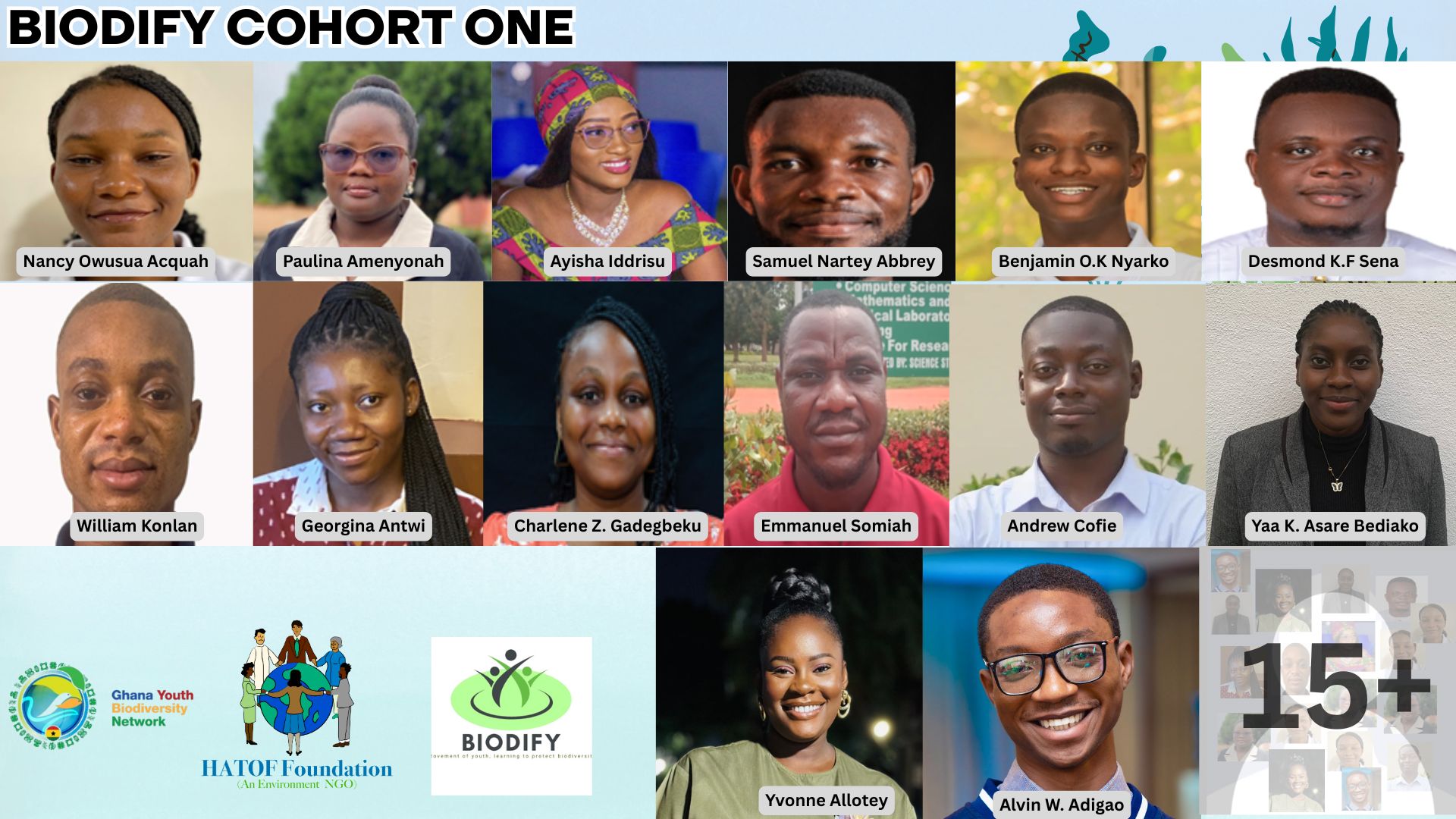
Celebrating the Successful Completion of Cohort 1

Following weeks of intensive learning, engagement, and knowledge exchange, BIODIFY successfully concluded its inaugural two-month cohort in September 2025, marking a significant milestone in the journey.

Cohort 1 brought together a diverse group of young people from various academic and professional backgrounds, united by a shared interest in biodiversity conservation and environmental sustainability. Throughout the program, participants engaged in a series of expert-led sessions that deepened their understanding of the ecological, social, economic, and governance dimensions of biodiversity.

Beyond knowledge acquisition, Cohort 1 contributed to building a vibrant network of emerging biodiversity leaders equipped to champion conservation efforts within their communities, institutions, and professional spheres.

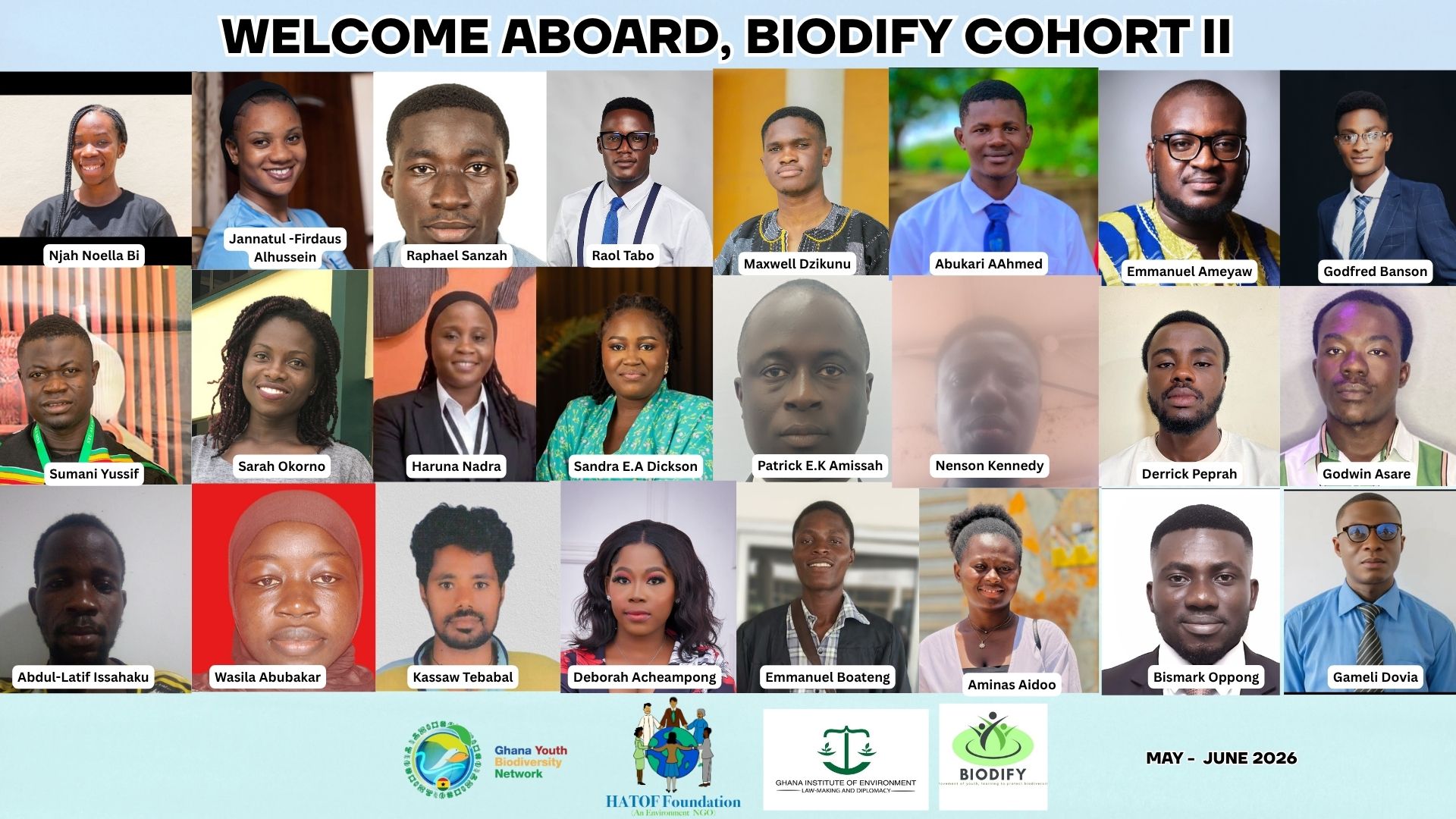
Cohort 2 Now Underway

Building on the success and momentum of the inaugural cohort, BIODIFY has officially commenced Cohort 2 in April 2026. The new cohort welcomes another group of enthusiastic and committed young people eager to expand their understanding of biodiversity issues and contribute to solutions that promote ecological sustainability and human well-being.

As the global community accelerates efforts to implement the Kunming-Montreal Global Biodiversity Framework and achieve national biodiversity targets, such as BIODIFY, play an important role in ensuring that young people are equipped to participate meaningfully in these processes.

Cohort 2 will continue the program’s commitment to delivering high-quality learning experiences, gaining deeper insights into biodiversity conservation, environmental governance, biodiversity finance, and shaping the future of people and nature.

Investing in the Next Generation of Biodiversity Leaders

The transition from Cohort 1 to Cohort 2 reflects BIODIFY’s growing impact and the increasing interest among young people in biodiversity and environmental stewardship.

Through the partnership between HATOF Foundation, GhYBN, and GIELD, the program is helping to cultivate a new generation of biodiversity leaders who are informed, empowered, and prepared to contribute to achieving national and global biodiversity goals.

As BIODIFY continues to grow, it remains committed to fostering knowledge, leadership, collaboration, and action, ensuring that young people are not only included in biodiversity conversations but are actively shaping the future of biodiversity conservation in Ghana and beyond.

Picture1

HATOF Contributes to Ghana’s Seventh National Report to the Convention on Biological Diversity

Accra, Ghana -17th February 2026: HATOF Foundation participated in a national stakeholder engagement workshop convened by the Ministry of Environment, Science and Technology (MEST) to review Ghana’s draft Seventh National Report (7NR) to the United Nations Convention on Biological Diversity (UNCBD).

Under the Convention, Parties are required to periodically submit National Reports outlining progress in implementing their National Biodiversity Strategy and Action Plan (NBSAP), including policy measures adopted, programmes implemented, results achieved, and persisting gaps. The current reporting cycle is aligned with the Kunming-Montreal Global Biodiversity Framework (KMGBF), which establishes 23 global targets to be achieved by 2030. These targets span ecosystem restoration, species conservation, pollution reduction, sustainable use, and resource mobilization. National Reports contribute to global monitoring, peer learning, and accountability, and inform deliberations at the next meeting of the Conference of the Parties (COP).

The workshop specifically provided a platform for civil society organizations, and Indigenous Peoples and Local Communities (IPLCs), as non-state actors, to validate and input biodiversity-related interventions into the national reporting template. Emphasis was placed on linking field-level initiatives to relevant KMGBF targets, identifying financing sources, providing verifiable references, and ensuring coherence with Ghana’s National Biodiversity Strategy and Action Plan.

Representing HATOF, Biodiversity Policy and Programmes Officer, Ms. Nyuiemedi participated, and ensured that HATOF’s programme and policy interventions were accurately reflected in the report and properly aligned with applicable targets under the KMGBF, strengthening the evidence base of Ghana’s submission.

HATOF remains committed to supporting the implementation of Ghana’s National Biodiversity Strategy and Action Plan, and engaging constructively in national and global biodiversity governance processes.

WETLANDS DAY

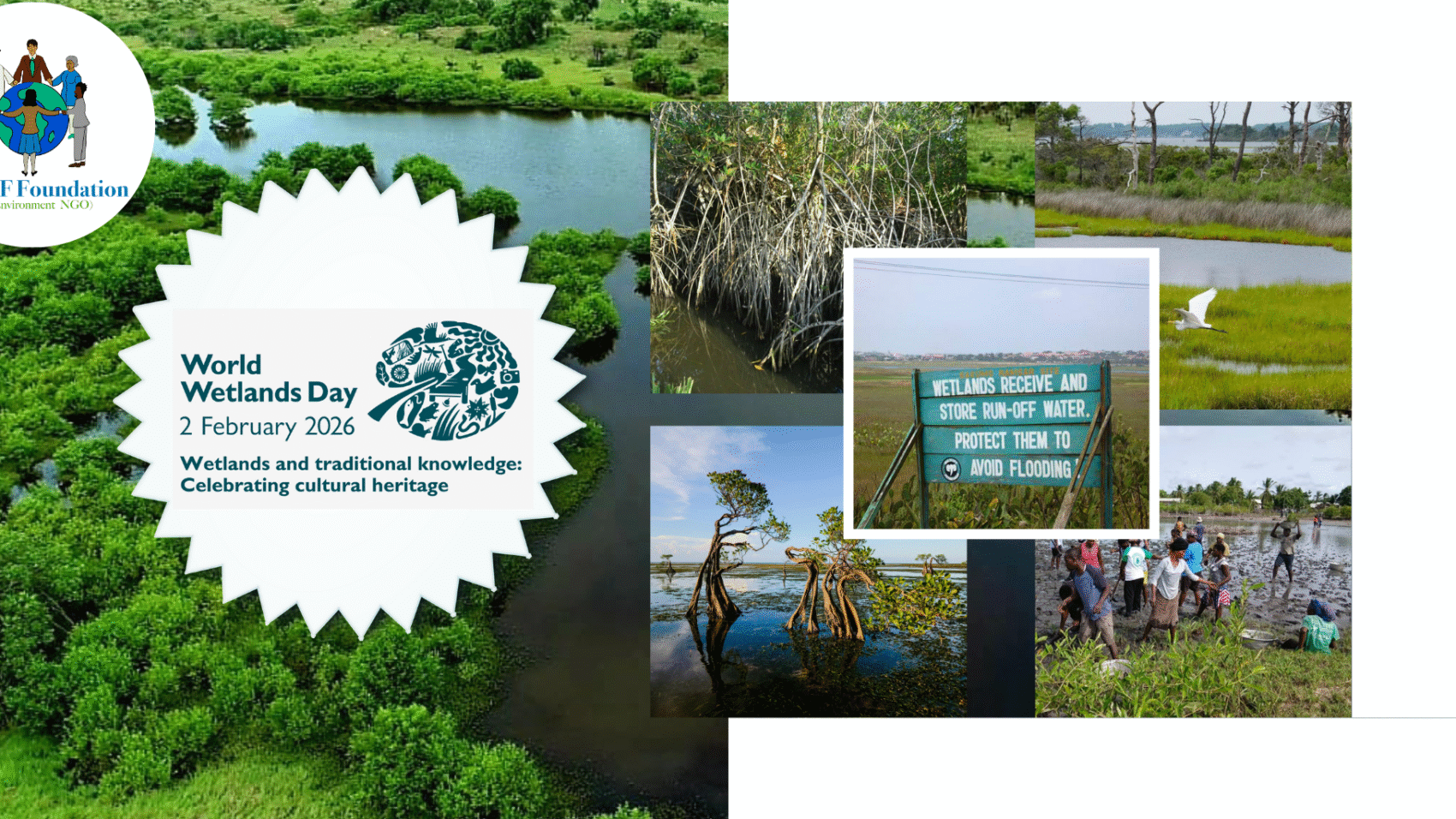
HATOF Foundation Feature – World Wetlands Day 2026“ Protecting Our Wetlands, Securing Our Future: The Keta Lagoon as a Pillar of Ghana’s Ramsar Commitment”

Among the world’s most productive ecosystems are wetlands, which support exceptionally high concentrations of birds, mammals, reptiles, amphibians, fish, and invertebrate species.


To better contextualize their importance, it is essential to understand what wetlands are. According to Article 1.1 of the Convention on Wetlands, also known as the Ramsar Convention (1971), wetlands are defined as:
“areas of marsh, fen, peatland or water, whether natural or artificial, permanent or temporary, with water that is static or flowing, fresh, brackish or salt, including areas of marine water the depth of which at low tide does not exceed six metres.”


For the purposes of protecting sites adjacent to wetlands, Article 2.1 of the Convention further clarifies that wetland: “may incorporate riparian and coastal zones adjacent to the wetlands, and islands or bodies of marine water deeper than six metres at low tide lying within the wetlands.”


While the Convention has classified wetlands into 42 types, five major wetland types are generally recognized:

  • Marine (coastal wetlands including coastal lagoons, rocky shores, and coral reefs);
  • Estuarine (including deltas, tidal marshes, and mangrove swamps);
  • Lacustrine (wetlands associated with lakes);
  • Riverine (wetlands along rivers and streams); and
  • Palustrine (meaning “marshy,” including marshes, swamps, and bogs).

These classifications are further grouped under three broad categories: Marine and Coastal Wetlands, Inland Wetlands, and Human-made Wetlands. Human-made wetlands include fish and shrimp ponds, farm ponds, irrigated agricultural land, salt pans, reservoirs, gravel pits, sewage farms, and canals.


From this definition and classification, wetlands are recognized as critical ecosystems that support biodiversity, regulate water systems, mitigate flooding, and purify water, while also providing significant socio-economic benefits, including livelihoods, natural resources, food production, and domestic water supply.


Ghana became a contracting party to the Ramsar Convention on Wetlands in 1988, reflecting a longstanding commitment to the conservation and sustainable use of wetlands. Through the d esignationof six Ramsar sites – the Keta Lagoon Ramsar Complex, Densu Delta, Muni–Pomadze, Sakumo, Songor, and the Owabi Wildlife Sanctuary–covering a total surface area of 205,162 hectares, the Government of Ghana has sought to conserve biodiversity, protect livelihoods, and integrate wetlands into national development strategies.


The Wildlife Division of the Forestry Commission, working in collaboration with local authorities, traditional institutions, civil society organizations, and research bodies, has advanced the management of these sites through legal frameworks, community-based approaches, and public education programmes, including World Wetlands Day celebrations.


Implementation of these measures also aligns with Ghana’s commitments under the Convention on Biological Diversity (CBD) and contributes to the achievement of the Sustainable Development Goals (SDGs), particularly SDG 6 (Clean Water and Sanitation), SDG 13 (Climate Action), SDG 14 (Life Below Water), and SDG 15 (Life on Land).


The Case for the Keta Lagoon Ramsar Complex
The Keta Lagoon, Ghana’s largest lagoon system, is of exceptional ecological, socio-cultural, and economic significance.


It spans approximately 120 km² and supports over 200 fish species, including economically important species such as tilapia, bonga, and mullet. The lagoon sustains the livelihoods of an estimated 50,000 people, primarily from the Anlo State and surrounding communities, who rely on artisanal fishing, salt production, and agriculture.


Beyond food security, the lagoon acts as a natural buffer against coastal erosion, and yet the system is losing an estimated 30–40 meters of shoreline per year due to sea-level rise, sediment disruption, and sand mining.


The lagoon is also critical for biodiversity, hosting migratory waterbirds along the East Atlantic Flyway, wetland vegetation that stabilizes soils, and habitats for endemic species. Its sustainable management is therefore central to Ghana’s blue economy, supporting fisheries, aquaculture, and tourism, while advancing ecosystem-based climate adaptation.


Despite its Ramsar designation, Keta Lagoon faces growing threats from pollution, hydrological changes, and unsustainable land use. Strengthening the lagoon’s protection requires science-based monitoring, restoration programs, and community co-management, recognizing the Anlo people’s traditional stewardship. Doing so aligns directly with Ghana’s Ramsar obligations, the CBD’s global biodiversity target 2, and national strategies for climate resilience and sustainable development.


HATOF Foundation, therefore, calls for increased investment in the Keta Lagoon Ramsar Complex as a national and regional priority, ensuring that biodiversity, local livelihoods, and the blue economy are safeguarded for present and future generations.

HATOF Foundation at WGDSI-2: Advancing Benefit-Sharing Mechanisms For Digital Sequence Information

DR. SAMUEL DOTSE HAILS THE HISTORIC LAUNCH OF THE CALI FUND FOR BIODIVERSITY


Rome, 28 February 2025 – Dr. Samuel Dotse, the Chief Executive Officer of the HATOF Foundation, has welcomed the historic launch of the Cali Fund, a financial mechanism designed to ensure fair and equitable benefit-sharing from digital sequence information (DSI) on genetic resources.
This groundbreaking move took place on the sidelines of the resumed session of the 16th UN Biodiversity Conference in Rome, setting the stage for a more sustainable and cooperative approach to biodiversity protection.
The Cali Fund is set to receive contributions from private sector entities that use DSI for commercial purposes, representing a transformative shift in how biodiversity is financed. A key feature of the Fund is its commitment to direct at least 50% of its resources to Indigenous and local communities who are important stewards of the world’s biodiversity.
Dr. Samuel Dotse expressed his excitement at the launch, emphasizing the importance of compensating local communities for their ongoing contributions to biodiversity protection: “I am particularly excited about the Cali Fund seeing the light of day at this resumed session. Compensating local communities for their contribution to biodiversity protection is long overdue. With the launch of this Fund, our local communities, which are at the forefront of biodiversity protection, will receive support for their conservation efforts.”
The commitment to channel resources from the Cali Fund to local communities is a significant development in the evolving approach to biodiversity conservation. By securing funds from the private sector, the Fund represents a new frontier of biodiversity finance, ensuring that those closely connected to nature and land receive support for their invaluable role in safeguarding biodiversity for global benefit.
HATOF Foundation reaffirms its commitment to empowering local communities and advancing a more sustainable and suitable future for biodiversity protection.

Governments Unite to Mobilize Resources for Biodiversity Protection

Governments Unite to Mobilize Resources for Biodiversity Protection at the Resumed Session of the 16th UN Biodiversity Conference.

Rome, 28 February 2025 – Governments have agreed on a comprehensive strategy to secure the necessary funds for biodiversity protection and achieve the Kunming-Montreal Global Biodiversity Framework (KMGBF) targets. The agreement reached in Rome marks the successful conclusion of the 16th UN Biodiversity Conference of Parties (COP16), which resumed after being suspended in Cali, Colombia, in 2024.

The agreement focuses on a multi-faceted resource mobilization approach to closing the global biodiversity finance gap. This includes a commitment to mobilizing at least $200 billion annually by 2030, including $20 billion annually in international flows by 2025, rising to $30 billion by 2030. A key element is the establishment of permanent financial mechanisms to support the Convention on Biological Diversity, alongside improvements to existing financial instruments.

According to Susana Muhamad, COP16 President, discussions in Rome have demonstrated a strong commitment to advancing the Global Biodiversity Framework and creating lasting solutions for biodiversity protection.

Astrid Schomaker, Executive Secretary of the Convention on Biological Diversity, recognizes the crucial role of multilateral cooperation in achieving this goal.

The meeting also resulted in adopting a new Strategy for Resource Mobilization, tapping into diverse funding sources, including public finance, private investment, and philanthropic contributions. This strategy complements the ongoing work of the Global Environment Facility (GEF), which has already approved over $3 billion in support for biodiversity initiatives, leveraging an additional $22 billion in co-financing, including significant private-sector involvement. COP16 also agreed on key steps for ongoing collaboration and establishing a multi-year program of work, which will be discussed further at COP17. The global commitment to biodiversity, coupled with the development of new financial mechanisms and enhanced monitoring frameworks, provides a solid foundation for achieving the goals of the Kunming-Montreal Global Biodiversity Framework

Highlights of the First Week of the Sixteenth Conference of Parties (COP16) to the Convention on Biological Diversity Negotiations in Cali, Colombia.

Highlights of the First Week of the Sixteenth Conference of Parties (COP16) to the Convention on Biological Diversity Negotiations in Cali, Colombia.

October 28, 2024, Cali, Colombia – Yesterday, October 27, 2024, marked the end of the first week of the two weeks of negotiations on the Convention on Biological Diversity (CBD) in Cali, Colombia, and the stakes are already very high.

The main issues discussed at the COP, among other things, have been:

  • finalization of the multilateral mechanism for fair and equitable sharing of benefits from Digital Sequence Information (DSI) on genetic resources,
  • mobilization of biodiversity finance,
  • integration of climate change and biodiversity and
  • recognition and leveraging the contribution of Indigenous people and local communities to biodiversity conservation.

The first week was already characterized by contentious positions and disagreements, particularly on lack of clarity on what constitutes DSI, the scope of biological information DSI should cover, and how to address the potential conflict between DSI-related patents and traditional knowledge rights, as well as how to distribute monetary and non-monetary benefits derived from DSI data fairly.

Another bone of contention is securing sufficient funding and distributing it to developing countries to protect their diverse ecosystems. Some developing countries have clashed over the future of the Global Biodiversity Framework Fund (GBFF), created two years ago in Montreal, Canada, in 2022.

These biodiversity-rich nations believe that the current architecture of the GBFF puts them at a disadvantage. Hence, they want the GBFF replaced with a new Fund that balances the governance arrangement to give them equal representation and easier access to the fund and its resources.

As the first week of the negotiations ends, the stage is set for intense discussions in the second week. The arrival of ministers of state in the coming days will likely bring increased pressure to resolve these differences.

The high-level segment is scheduled for October 29-30, and ministers will join the negotiations, bringing their countries’ positions to the table. The outcome of these negotiations will be crucial in determining the success of COP 16 and the future of biodiversity conservation.

With over 15,000 delegates from almost every country, this two-week meeting is crucial for implementing the Kunming-Montreal Global Biodiversity Framework (KMGBF) adopted in 2022 at COP 15 in Montreal, Canada.

The KMGBF is the landmark global biodiversity plan that aims to address the alarming rate of biodiversity loss while promoting sustainable development. It sets four (4) ambitious goals and 23 targets for 2030, including protecting 30% of the world’s land and seas, reducing harmful subsidies, and restoring degraded ecosystems.

World leaders emphasized urgent collective action to protect biodiversity under the theme, “Peace with Nature,” at the conference’s opening on October 20, 2024, in Cali, Colombia.

Typical of all conferences, the opening witnessed many statements, including UN Secretary-General Antonio Guterres’s admission that nature must flourish for humanity to thrive.

The Executive Secretary of the Convention on Biological Diversity, Astrid Schomaker, admonished the global community to “seize the moment to ensure that biodiversity is not just preserved but also restored and valued for the crucial role it plays in sustaining life on Earth.”

Optimistic about the conference’s success, the Minister of Environment and Sustainable Development in Colombia, H.E. Susana Muhamad, was hopeful that the conference would bring concrete actions to fulfill the Kunming-Montreal Global Biodiversity Framework (KMGBF).

HATOF looks forward to COP16 adopting an ambitious decision on how the multilateral mechanism for the fair and equitable sharing of benefits arising from using digital sequence information (DSI) of genetic resources should operate, including creating a dedicated fund to collect and disburse the generated resources. We are also keen to understand better what constitutes non-monetary benefits from DSI.

HATOF Foundation at WGDSI-2: Advancing Benefit-Sharing Mechanisms For Digital Sequence Information

HATOF Foundation at WGDSI-2: Advancing Benefit-Sharing Mechanisms For Digital Sequence Information

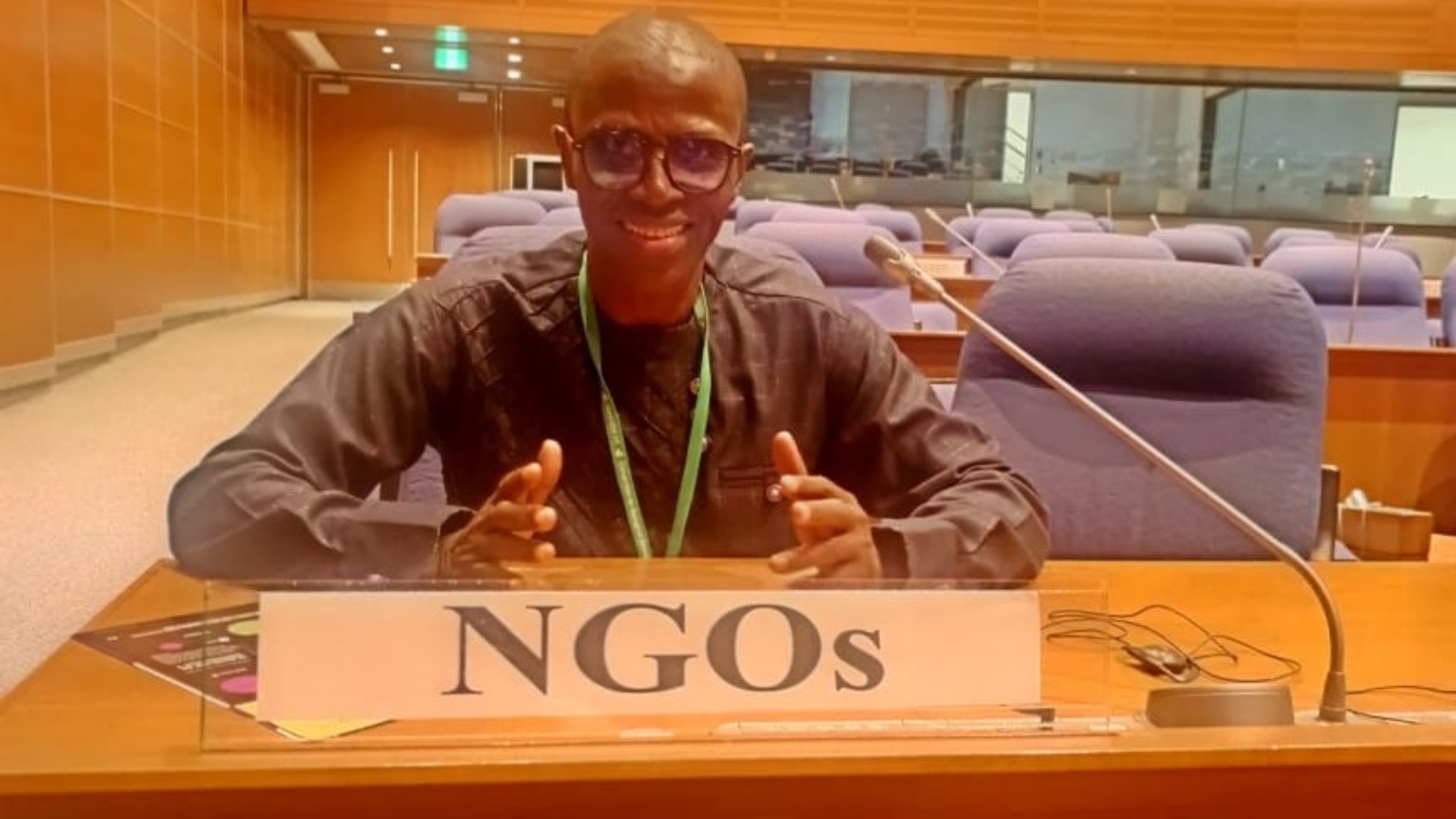
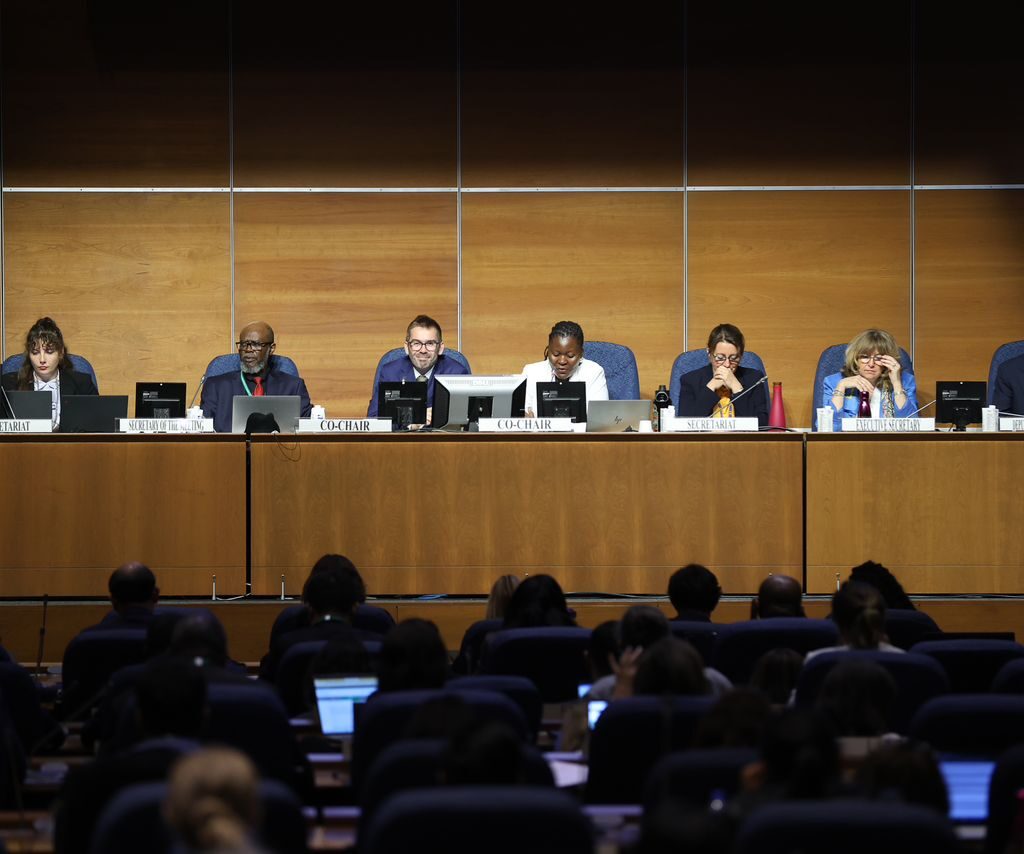
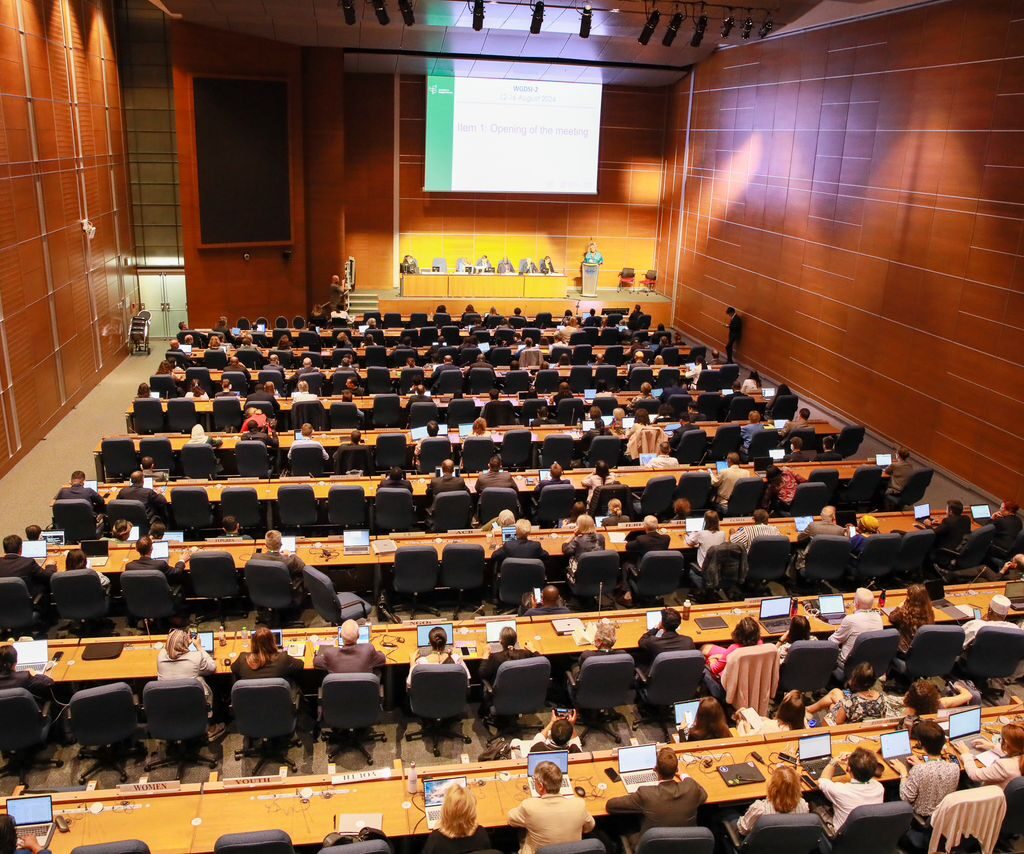
From August 12 to 16, 2024, the HATOF Foundation, represented by the Chief Executive Officer, Dr. Samuel Dotse, is actively participating in the Second Meeting of the Ad Hoc Open-ended Working Group on Benefit-sharing from the Use of Digital Sequence Information (DSI) on Genetic Resources (WGDSI-2), which is being held at the ICAO Conference Centre in Montreal, Canada.

This pivotal meeting brings together international delegates and stakeholders to advance discussions on the multilateral mechanism for benefit-sharing from the use of DSI on genetic resources.

This mechanism, established under Decision 15/9 of COP 15 and part of the Kunming-Montreal Global Biodiversity Framework (KMGBF), includes a global fund designed to ensure fair and equitable sharing of benefits.

Key agenda items for WGDSI-2 include:

Development of the Multilateral Mechanism: Deliberations focus on the operational aspects of the mechanism and the associated global fund, as outlined in document CBD/WGDSI/2/2. This involves setting practical modalities for payments, disbursements, and management of the fund.

Technical Insights and Policy Options: Participants will review summaries from Mphatso Kalemba (Malawi) and William Lockhart (United Kingdom), alongside executive summaries of studies commissioned by the CBD Secretariat, providing crucial insights for shaping the multilateral mechanism.

HATOF Foundation at WGDSI-2: Advancing Benefit-Sharing Mechanisms For Digital Sequence Information

What is at stake?

The multilateral mechanism, including the global fund, is expected to achieve several key objectives:

Provide a Multilateral Solution: The mechanism will offer policy guidance on the fair and equitable sharing of benefits from the use of digital sequence information on genetic resources, ensuring that the process is transparent and inclusive.

Bridge Gaps in Science and Technology: The mechanism is anticipated to generate non-monetary benefits, such as capacity-building, development, and technology transfer, which will help bridge scientific, technical, and technological gaps in how DSI on genetic resources is accessed and utilized globally.

HATOF Foundation at WGDSI-2: Advancing Benefit-Sharing Mechanisms For Digital Sequence Information

Mobilize New Funding for Biodiversity Conservation: The establishment of the global fund is expected to mobilize new streams of additional funding that will be channelled towards biodiversity conservation, contributing to the sustainable use of genetic resources.

The HATOF Foundation’s involvement underscores our commitment to promoting equitable benefit-sharing and enhancing global capacity for biodiversity conservation.

We are engaging with various stakeholders to ensure that the interests of developing countries and local communities are well represented in these crucial discussions.