Accra, Ghana. June 17, 2026. Civil Society Organizations (CSOs) working across Ghana’s environment, conservation, and natural resource governance space convened at the Oak Plaza Hotel in Accra on Tuesday,16th June,2026, to deliberate on the environmental dimensions of the ongoing constitutional review process. The workshop formed part of the broader work of the Citizens Platform on Constitutional Review (CPCR), an initiative facilitated by Coalition for Constitutional Democracy (CDD)-Ghana, STAR-Ghana Foundation, and Democracy Hub, in partnership with A Rocha Ghana, and convened to ensure that citizens, rather than political actors alone, help shape the country’s third major attempt at constitutional reform, and HATOF Foundation was at the table. The discussions were anchored in the work of the Constitutional Review Committee (CRC), appointed by President Mahama in January 2025, whose report, released in January 2026, proposes the most far-reaching environmental reforms in the country’s constitutional history.
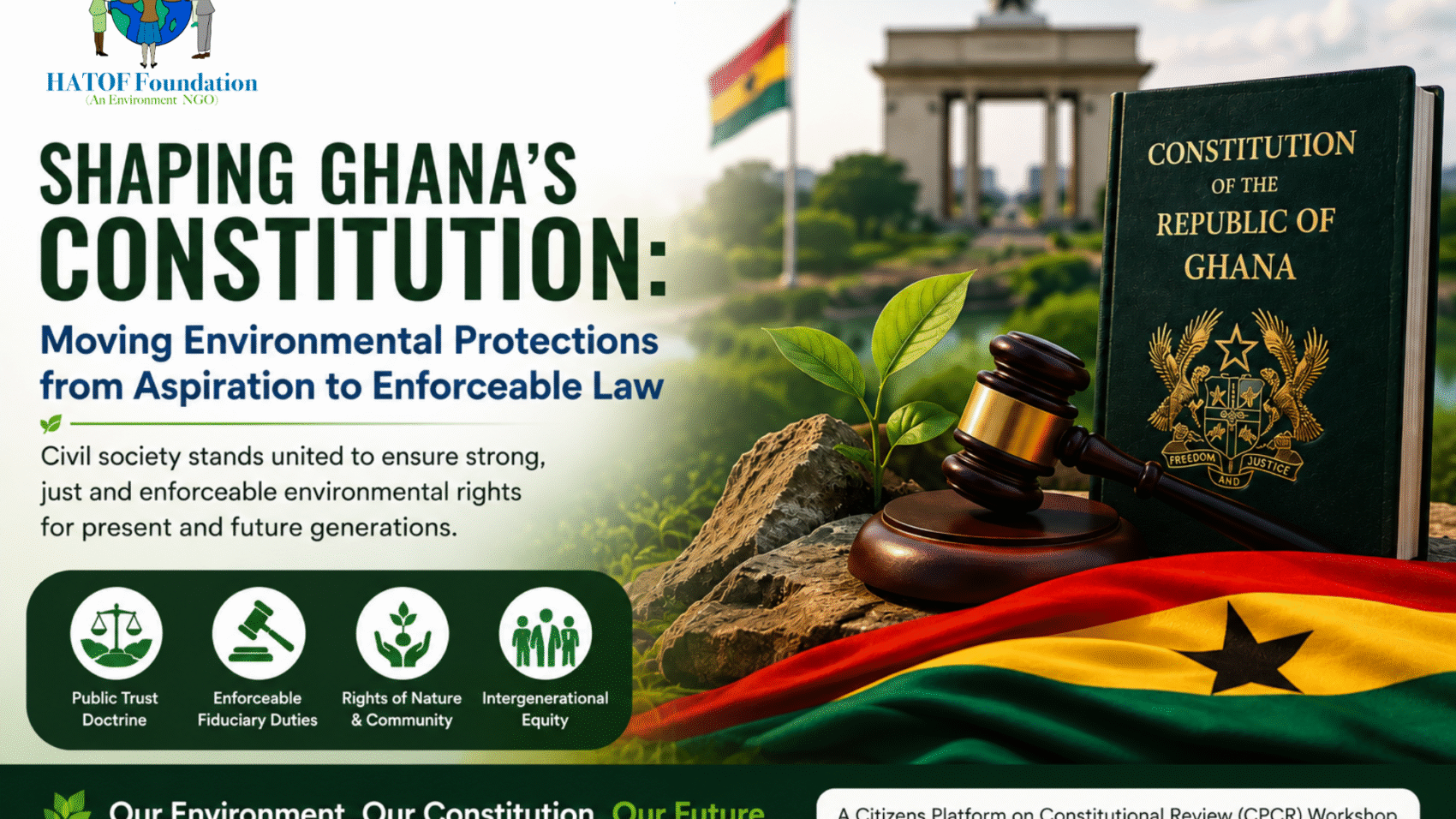
The recommendations include a Public Trust Doctrine, making the State a trustee, not an owner, of natural resources, binding government by law to manage Ghana’s lands, water, minerals, and biodiversity for present and future generations. This means government becomes legally accountable for how it manages those resources, not just politically answerable; enforceable fiduciary binding public authorities to act with transparency, sustainability, and intergenerational equity in all resource decisions – duties that citizens could challenge in court if breached; a new constitutional offence of ecocide with stiff sanctions, which is a significant departure from the administrative penalties that exist today; and stronger community rights through Free, Prior and Informed Consent. Under the current 1992 Constitution, Article 36(9) makes environmental protection non-justiciable, meaning no citizen can sue government for failing to protect the environment. These proposals change that fundamentally by converting environmental stewardship from a political promise into a legal obligation.
HATOF Foundation brought two critical perspectives to the room. Dr. Samuel Dotse, HATOF’s Chief Executive Officer, urged participants to move past treating biodiversity as an economic asset and recognize its right to thrive independent of market value. The organization’s Biodiversity Policy and Program Officer, Ms. Nyuiemedi Dzramado, flagged a gap: while the reform language is detailed on minerals and community dividends, it says almost nothing about access and benefit-sharing over genetic resources, an obligation Ghana has already taken on under the Nagoya Protocol to the Convention on Biological Diversity.
The outcome of this constitutional moment will shape how Ghana manages its forests, water, minerals, and biodiversity for generations to come, and civil society’s voice in the room is what will determine whether that outcome is worth having.
