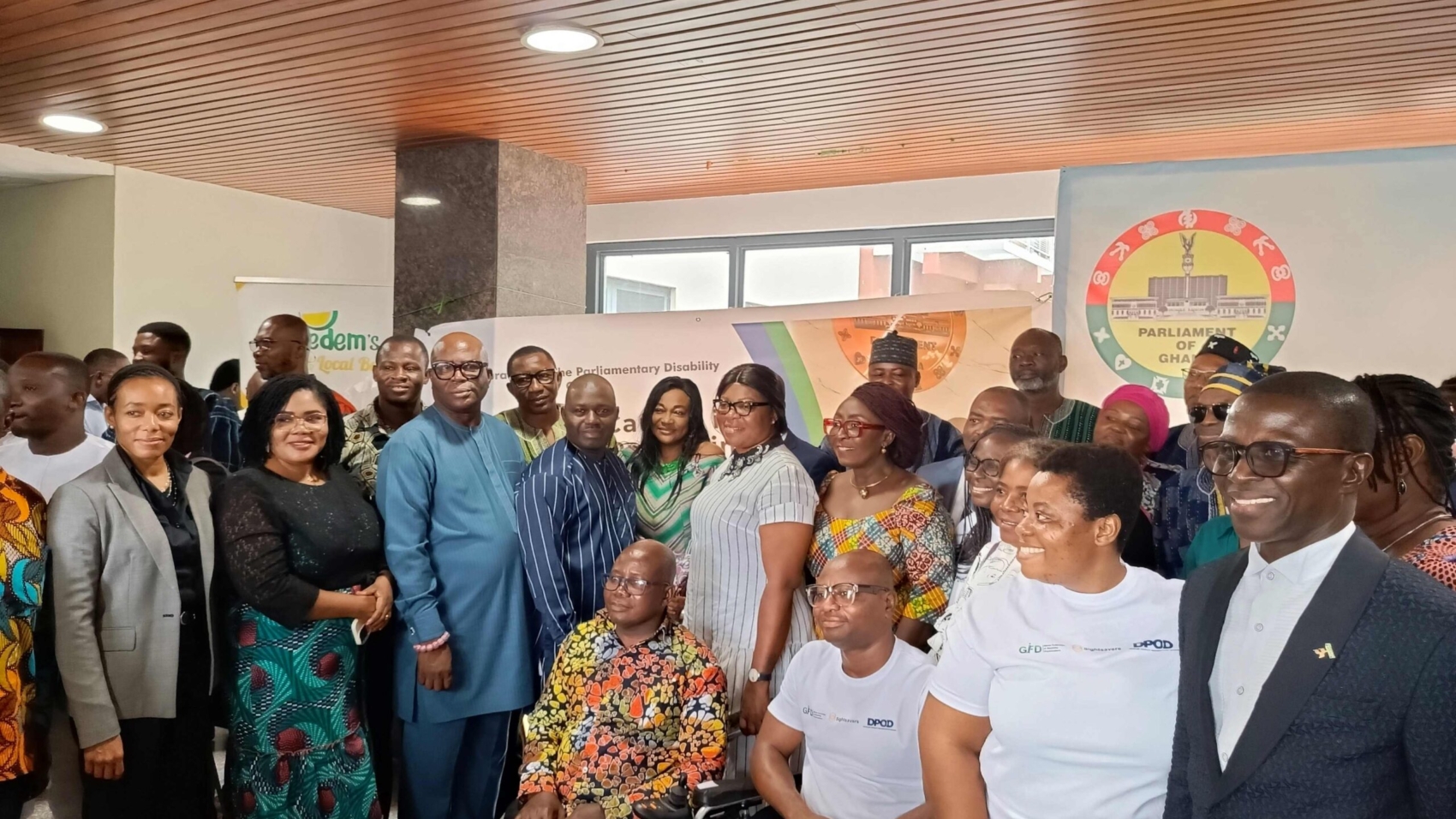
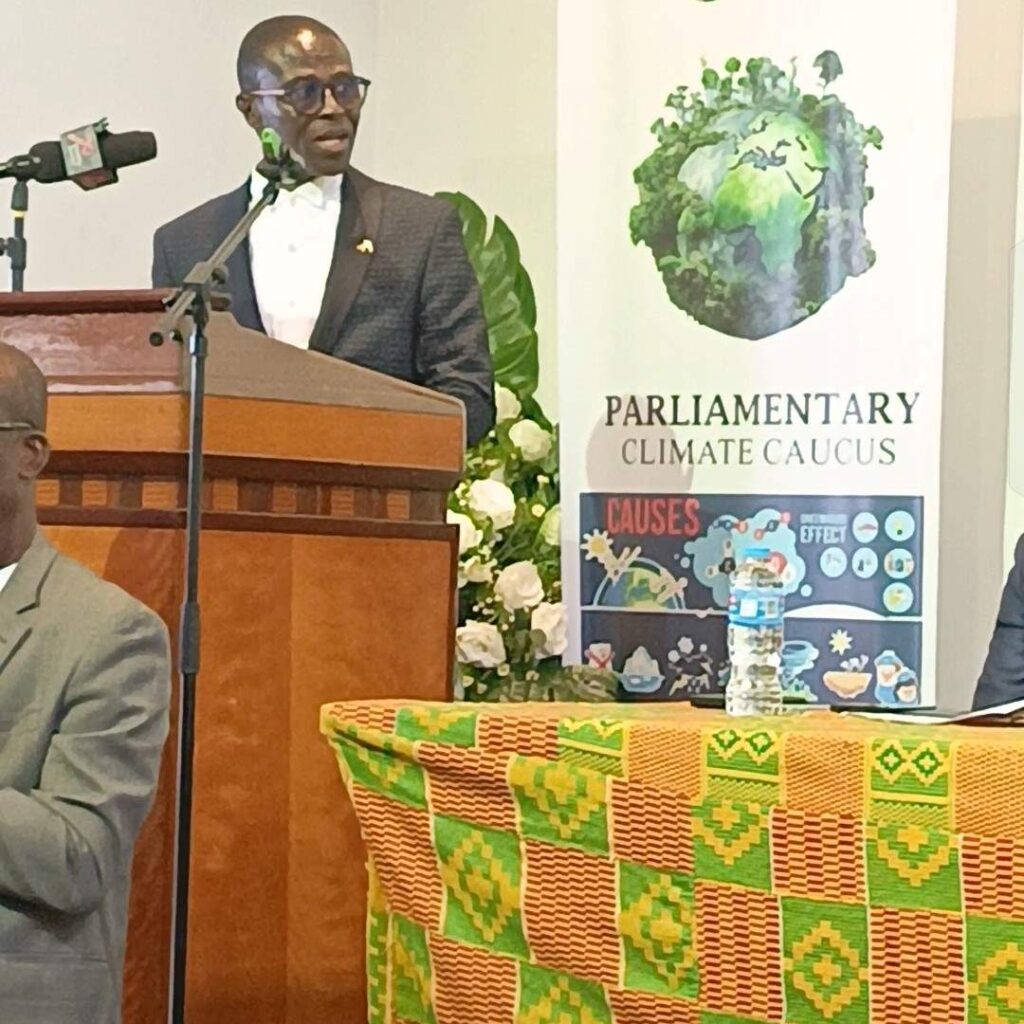
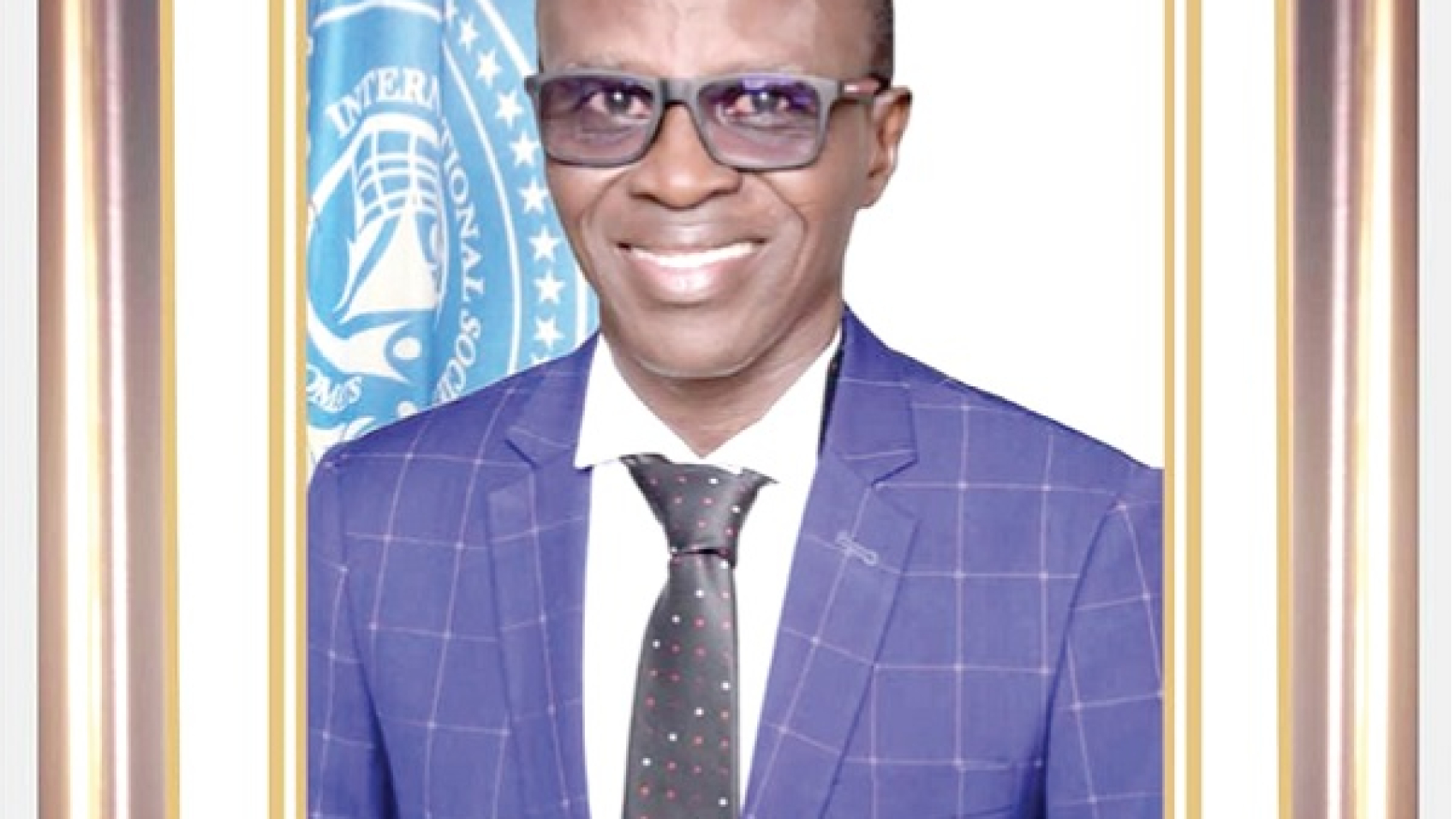
Dr. Samuel Dotse, CEO of HATOF Foundation, has congratulated the Parliament of Ghana for launching the Ghana Parliamentary Caucus on Climate Change at the Parliament House of Ghana yesterday, August 28, 2024, and pledged HATOF’s support to the Caucus’ work.
The Caucus is to focus on legislative frameworks, adaptation measures, and climate finance to enhance climate resilience and sustainability while providing an opportunity for its members to strategize, network, and build capacity in tackling climate change issues in the country.
Delivering his goodwill message, Dr. Dotse extended his warmest congratulations and best wishes to the leadership of Parliament, especially the Rt. Hon. Speaker, Alban Kingsford Sumana Bagbin, for the bold step.
He said that at a time when the world is currently facing the global planetary crisis of climate change, biodiversity loss, and pollution—threatening to derail our development gains—as leaders, the legislature has a critical “role to play in shaping laws and policies, collaborating internationally, and ultimately promoting sustainable development and mitigating the impacts of and enhancing resilience to climate change.”
Dr. Dotse welcomed the theme, “Strengthening legislative action for climate resilience and sustainable development,” and stressed that it is “a vital step for ensuring the future for plants, animals, employment, and humans, who rely on a healthy planet and ecosystem.”
He revealed that while the International Labour Organization has estimated that 1.2 billion jobs depend on a healthy environment globally, the cost of Ghana’s national climate actions is anticipated to be between USD 9.3 billion and USD 15.5 billion, which is likely to produce over 1 million jobs by 2030.
Unfortunately, the World Bank 2017 Country Environmental Analysis Report for Ghana revealed that “our beautiful country loses USD$6.3 billion annually due to environmental degradation.”
He was however optimistic that “our combined efforts will assist bridge the gap between aspiration and action, transforming pledges into measurable outcomes.”
The Parliamentary Caucus on Climate Change, according to Dr. Dotse, “reflects the spirit of collaboration, inventiveness, and dedication required to confront the climate catastrophe locally, while we also take action to reduce the disastrous effects of climate change in coastal communities, especially the Keta Municipality.”
Urging all to embrace this opportunity to work together, share knowledge, and leverage their influence to drive meaningful policy changes, Dr. Dotse pledged HATOF’s commitment “to supporting Parliament on this noble course so that we can build a brighter and more sustainable future for all.”
In shedding light on the collaborative effort of Parliament, the Speaker of Parliament, Rt. Hon. Alban Kingsford Sumana Bagbin announced that the New Standing Orders of Parliament have established structures that will “permanently link us with civil society.”
He further stressed that the Caucus will “promote interparty collaboration” while engaging with civil society and international partners to support the implementation of Ghana’s Nationally Determined Contributions under the Paris Agreement.
The Hon. Bagbin emphasised the caucus will commit to ensuring that climate action and disability issues are integrated into our national development agenda.
Every year, the world meets at what we call the Conference of Parties (COP) to determine ambitions and responsibilities and identify measures for climate action. The COP also reviews and assesses the effect of measures parties have introduced to limit climate change against the overall goal of the United Nations Framework Convention on Climate Change (UNFCCC).
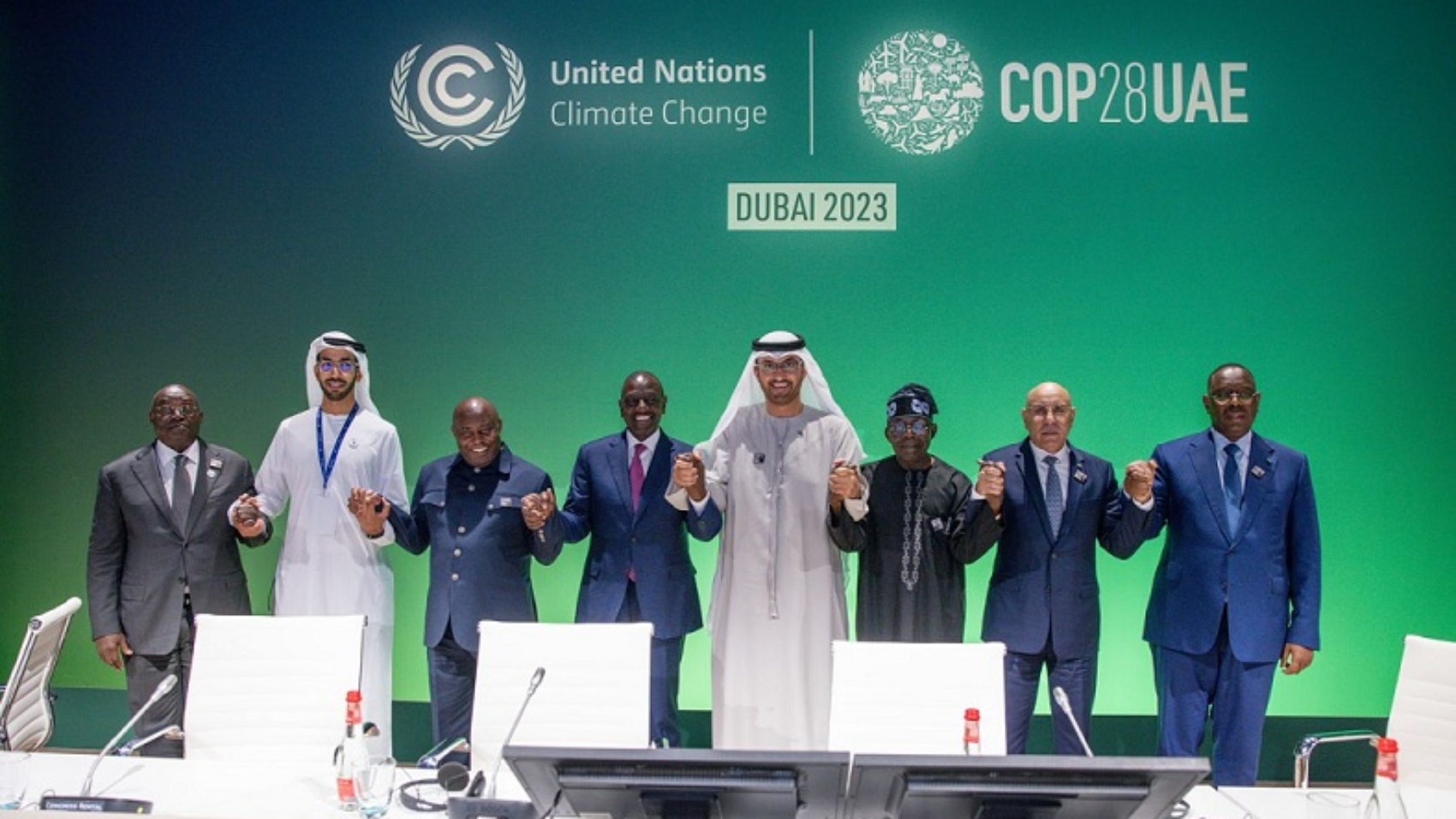
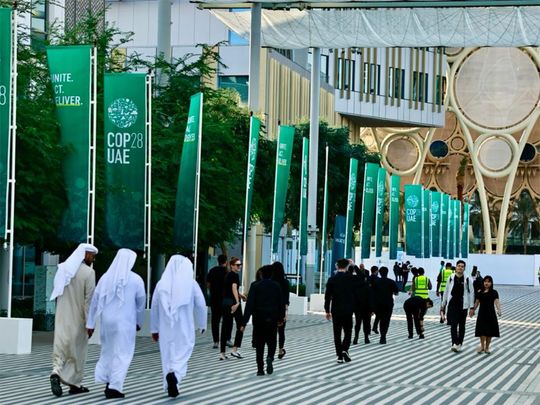
When the COP28 president, Dr. Sultan Al Jaber, CEO of Abu Dhabi National Oil Company (ADNOC), was announced, many people within the climate space felt his election was a mismatch for the climate debate where there were rising calls for keeping fossil fuels on the ground. There were many doubts about what the conference could achieve in a “petrostate,” and Dr. Al-Jaber was considered a fossil fuel mogul.
However, COP28 had a promising start as Dr. Sultan al-Jaber led the opening session on November 30, 2023, with the summit agenda adopted within hours and the funding arrangements for the Loss and Damage Fund operationalized.
The main themes discussed at COP28 have been the Global Stocktake, Fossil fuel phaseout or phasedown, renewable energy targets, carbon markets, loss and damage, climate finance, and adaptation. Here are some We will bring you some highlights.
Climate Finance
The discussions under finance have been to bridge the financing gap between developed and developing countries by setting a climate goal for 2030 and beyond and addressing calls to double the adaptation finance.
It would be recalled that in 2009 at COP15, developed countries pledged to mobilize $100 billion per year by 2020 for developing countries to combat climate change through mitigation and adaptation activities, and to date, this goal has not been achieved. This failure was because the decision was politically motivated and not necessarily science-based. To correct this mistake, the New Collective Quantified Goal (NCQG) on climate finance is being negotiated to set realistic targets and ensure a more effective approach to climate finance. The NCQG is to raise the floor of climate finance above $100 billion annually to address the needs and priorities of developing countries and is set to be adopted at COP29 next year. The main issues to be addressed in the NCQG include the quantity, quality, accountability, additionality, and transparency of climate finance.
But so far, negotiations on this item have primarily focused on procedural or methodological matters, with moderate political sensitivity and slow progress. This makes it unlikely that any concrete decision will be made on this crucial topic at this year’s COP28.
Loss and Damage Fund agreed – But money is a drop in the ocean
Loss and damage in the context of climate change is an irreversible destruction and loss of lives and livelihoods resulting from climate change. Hence, the decision to establish the loss and damage fund was celebrated as a historic success of COP27 in Egypt. Despite the many dissenting views on the need to establish a different funding mechanism, the big news of the first day of COP28 was that countries reached an agreement to set up the loss and damage fund, with the UAE immediately pledging USD 100 million. Pledges flowed from other countries, including Germany, the UK, the USA, Japan, and the EU, totaling USD 726 million (€674 million).
Regardless, climate activists are unsatisfied with the total amount pledged because the amount is nothing compared with the profits oil industries are making.
According to a report by the International Energy Agency (IEA), the profit of the oil and gas industries jumped to $4 trillion (€3.7 trillion) in 2022. Meanwhile, the irreversible economic and non-economic impact that the loss and damage fund seeks to address is estimated at $400 billion (€371 billion) annually. This puts the current pledges at just 0.2 percent of developing countries’ cost of climate breakdown.
Energy Transition – Phase out and phase-down of fossil fuel
Contrary to the public outcry regarding the election of Dr. Sultan Al Jaber as COP28 president, negotiations at COP28 have focused, among other critical issues, on decarbonizing the energy sector and many calls to fast-tracking the energy transition.
We have witnessed momentum in the first week of COP28, with over 85% of the global economy, representing 123 countries endorsing goals to triple renewable energy capacity BY 2030 and energy efficiency.
The prominent bone of contention at COP28 has been the issue of fossil fuel phaseout or phase down by 2030. What is the difference? To phase out means a shift from coal, oil, and gas until their use is eliminated – thus a complete end, while to phase down is understood to mean a reduction in fossil fuel use but not a complete end.
The phaseout/phase-down language has become a flashpoint for many oil, gas, and coal-producing countries.
We observed that while Chile, the EU, and others want the final COP28 deal to include a clear call on phasing out fossil fuel use, Saudi Arabia, Russia, and others are pressing down on any mention of fossil fuel phase-down.
Meanwhile, the US and China have avoided the terms altogether. Negotiators are thus looking for alternative wording that will still signal a shift from fossil fuels by the 2030s.
Global Stocktake – COP28 Success definer
One of the significant concerns and perhaps the most important text to finalize at COP28, which could also determine the success or otherwise of COP28, is the global stock take (GST). The GST is a two-year assessment of progress made by countries in implementing their nationally determined contributions towards addressing climate impacts. With the assessment results being very disappointing, the big agenda at COP28 is to negotiate a text on fossil fuel phase-out or phase-down in the global stocktake of progress to limit temperature rise to 1.5C, as agreed in the Paris Agreement. We notice that the current draft text has retained the fossil fuel phase-out language, but the decision to maintain or delete it is yet to be taken – by the end of COP.
Shocking and dramatic
One shocking and dramatic issue of the first week was the COP President revealed to have said that there was “no science” behind the call for fossil fuel phase-out. Upon receiving backlashes from climate campaigners, he quickly held a press conference to state that he was taken out of context and that phasing out or phasing down fossil fuels was “inevitable and in fact essential.” A COP28 spokesperson further defended progress made at the summit by stating that about 51 oil companies were invited to COP28 to agree to decarbonization targets.
Declarations and Announcements
11 pledges and declarations launched and received mixed levels of multinational support in areas including agriculture, health and peace.
$83 billion (€76.9 billion) in financial pledges and contributions mobilized in just five days of the summit.
$467 million pledged for urban climate action.
Launch of the Coalition for High Ambition Multi-Level Partnerships (CHAMP) with 65 countries
Rest Day at COP28
On Thursday, 7 December 2023, the official negotiations paused for a day’s rest. As the conference resumes today, Friday, 8 December 2023, we look forward to tackling the finer details of negotiation texts for the second week.
Meanwhile, President Al Jaber has signaled a goal to close the summit on schedule – thus, December 12 at 9 am during an open dialogue held with observers and parties last Wednesday.
Considering that eight years of the last COPs have stretched over by 24 hours, including COP26 in Glasgow and COP27 in Egypt, closing on time would have been a great feat the climate talks would have chalked under his leadership.
The Chief Executive Officer (CEO) of HATOF Foundation, an environmental non-governmental organisation, Dr Samuel Dotse, has been appointed African Special Envoy on Climate Change by the International Society of Diplomats (ISD).
“I am pleased to convey to you the approval of your appointment as ‘African Special Envoy on Climate Change’ by the Governing Council of the International Society of Diplomats, and by this appointment you are also admitted into the International Advisory Council”, a statement signed by the Secretary General of the ISD, Manuel Fernandez, said.
New appointment
According to the statement, Dr Dotse is expected to liaise with the international organisation’s headquarters in discharging the functions of his new office for a period of two years, renewable for two years.
That, the statement said, included the development of programmes and activities of the organisation and providing regular updates on their progress as well as promoting international cooperation with other relevant authorities.
According to the statement, Dr Dotse is also expected to provide expert advice on issues related to international diplomacy, economy, trade and investment, peace and social justice.
About ISD
The ISD is an international organisation, founded with core mandates to promote international diplomacy through friendship, trade and investment, international cooperation, peace and social justice, for development and advancement of humanity.
Dr Dotse is a Board Member of the Stakeholder Advisory Network on Climate Finance, an Expert Member of African Scientific Research and Innovation Council of the African Union and was a Regional Focal Point for Global Environment Facility Civil Society Network for West and Central Africa from 2011-2015.
Keta Dev
Meanwhile the Keta Lagoon Development Association (KLADA), an organisation of citizens of Anlo to support developmental programmes in the area and beyond, has congratulated Dr Dotse on his appointment to the high office.
A terse statement signed by Nelson Dovoh reads “Our most hearty congratulation on your new appointment.
It said “ It is our best wish and that of Anloland, Ghana and Africa that the benefits of this appointment will bring great benefits to all humanity but most importantly, Anlo”.
The 23rd meeting of the Conference of the Parties (COP 23) of the United Nations Framework Convention on Climate Change (UNFCCC) was held from 6 to 17 November in Bonn, Germany, under the presidency of the government of Fiji, the first time that a small island nation has served in this role. This is the second COP since the adoption of the Paris Agreement at COP 21 in 2015 and since the Agreement entered into force on 4 November 2016, just three days before the start of COP 22 in Marrakech, Morocco.
As of 22 November, 170 Parties have ratified the Agreement. Of the 197 Parties to the Convention, 195 originally signed it. Nicaragua initially argued it was not strong enough but has acknowledged that there is no alternative to the Agreement and ratified it just prior to the start of the COP. Syria, embroiled in a civil war since 2011, signed up on 7 November, leaving the United States as the only country which has rejected it, although it can’t officially withdraw until 4 November 2020, one day after the next U.S. presidential election.
It was expected to be a transitional and technical COP – and it was — with delegates charged with the complex task of writing the so-called “Paris Rulebook” for all of the elements mandated in the Paris Agreement and Decision text which is scheduled to be adopted next year at COP 24. They also had to complete the design of the 2018 “Facilitative Dialogue,” a test run for the “Global Stocktake” which all countries will conduct every five years starting in 2023 to assess and strengthen their “nationally determined contributions” (NDCs) and global progress toward reaching the goal of the Paris Agreement: to hold the increase in global average temperature to well below 2°C and pursue efforts to limit the increase to 1.5°C above pre-industrial levels.
Fiji brought vision to this technical COP through the Pacific tradition of “talanoa,” derived from “tala” meaning “talking or telling stories,” and “noa” meaning “zero or without concealment.” In the Fijian context, frank expression without concealment, in face-to-face dialogue, can lead to all participants understanding each other’s feelings and experiences.
The main COP decision – to be known as the Fiji Momentum for Implementation – contains three elements: a call for enhanced Pre-2020 Implementation and Ambition, a reiteration of the Paris Agreement Work Programme, and the design of the Facilitative Dialogue, rebranded by Fiji as the Talanoa Dialogue.
Here’s a shortlist of issues where progress (or no progress) was made in Bonn:
The design of the 2018 Talanoa Dialogue was jointly prepared by the COP 22 presidency of Morocco and the COP 23 Fijian presidency and will be launched in January 2018 under the leadership of Fiji and the COP 24 presidency, Poland. It aims to take stock of the collective efforts of Parties in relation to progress towards the implementation of the Paris Agreement, namely, the long-term goal of holding the increase in global average temperature to well below 2°C and to pursue efforts to limit the increase to 1.5°C above pre-industrial levels. Many Parties, especially developing countries, worked hard to ensure that the Fiji Presidency will continue to guide the Talanoa Dialogue throughout the year.
The Fiji Momentum for Ambition decides that the outcome of the 2018 Talanoa Dialogue will feed into the COP stocktake on pre-2020 ambition in 2019. The pre-2020 decision and the Talanoa Dialogue together create an ongoing series of dialogues and reviews to enhance pre-2020 action, which will hopefully build enhanced trust to increase ambition for both mitigation and support in the post-2020 period.
The final decision on Loss and Damage is hopelessly weak. It includes no permanent agenda item for implementing “action and support,” only “encourages” parties to make available sufficient resources for the operation of the executive committee, and merely “encourages” the executive committee to mobilize and secure finance. The sole tangible action is an “expert dialogue” in 2018 to explore how finance might be secured. The bottom line is this: there is no guarantee of financial support for those affected by catastrophic disasters or even for the body tasked to find that finance.
The outcome of the climate finance negotiations on long-term finance (LTF) – continued efforts by developed countries to jointly mobilize USD 100 billion annually by 2020 – were predictably unremarkable, reinforcing largely agreed conclusions of earlier years, and made no substantial progress to show increased ambition pre-2020 to move faster or even go beyond this finance goal. No significant announcements of additional climate finance contributions were made at the High Level segment of the climate talks beyond some support for the Adaptation Fund (AF) and the Least Developed Countries Fund(LDCF). An opportunity to build more trust in the pre-2020 and Paris implementation processes was missed.
The COP serving as the CMP made further progress regarding the future of the Adaptation Fund, currently providing funding under the Kyoto Protocol, by deciding that it shall serve the Paris Agreement, with further decisions to be taken by the CMA in 2018 on whether it should do exclusively and under the guidance of and accountable to the CMA and what governance and operational revisions, including of its financing structure, are necessary to get the Adaptation Fund ready to do so..
While COP23 saw many attempts to promote quick technofixes for the climate crisis (ranging from nuclear energy to CCS, Bioenergy with CCS / BECCS to solar geoengineering) at side events and “climate action” spaces, there were also, encouragingly, increased debates between academics and civil society on transformational approaches and pathways for 1.5°C – targeting the fossil fuel and energy sector, transport, agriculture, lifestyles, financial institutions, GDP growth, and many other out of the (climate) box ideas. Members of the CBD Alliance expressed their alarm over increased talks of geoengineering in the UNFCCC in an Open letter to the UNFCCC: “Geoengineering is a distraction from the real priorities – emission reductions“.
The agenda of the APA – the Ad Hoc Working Group on the Paris Agreement – includes negotiations on features, information and accounting guidance of countries’ nationally determined contributions (NDCs), adaptation communications, transparency, the five-year “ratchet and review” mechanism of the Paris Agreement (the Global Stocktake), implementation and compliance, the Adaptation Fund, and other matters. Over the first seven days, countries proposed all of the elements they want included in the principles, rules, modalities, and procedures for each of those sections, which were captured in several “Informal notes” throughout the process. By the end of the session, the compilation of those notes totaled 266 pages and are annexed to a COP decision.
Another part of the “Paris Rulebook” creation is tasked to the SBSTA – the Subsidiary Body on Scientific and Technical Advice. These deliberations are crucial because they focus on international cooperation to enhance ambition as defined in Article 6 of the Paris Agreement. One provision (Article 6.2) establishes “internationally transferred mitigation outcomes” (ITMOs) for countries to meet their NDCs. With regards to land use in the Rulebook, observers are detecting a link between the CORSIA, the carbon offsetting scheme which was established last year by ICAO — the International Civil Aviation Organization, a specialized UN agency – and the numerous references in the SBSTA text to cooperative approaches “outside the NDC.” This refers to mitigation outcomes, including possibly from REDD+, the UN framework to reduce emissions from deforestation and forest degradation, being transferred to non-state actors such as CORSIA, which will likely require billions of dollars to offset growth in aviation emissions.
A breakthrough early in the second week after five years of what could only be called bad faith negotiations on agriculture came as a genuine surprise to many observers. Developed countries stepped back from their opposition to long-standing proposals from developing countries and agreed for the subsidiary bodies to “jointly address issues related to agriculture, including through workshops and expert meetings,” and to take “into consideration the vulnerabilities of agriculture to climate change and approaches to addressing food security.” The decision on agriculture mandates a submissions process – which includes observers — to provide information on a number of topics so that scientific talks can now progress into action and the UN system can provide more strategic support to countries that need it.
Civil society observers and activists with a handful of allies in governments continue to push for inclusion of the Human Rightslanguage from the preamble of the Paris Agreement into the Rulebook. Meanwhile, civil society, human rights defenders, and representatives of national and international human rights institutions held several meetings on the sidelines of COP 23 to establish a narrative that frames climate change as a human rights issue and to discuss legal avenues for holding big polluters accountable for human rights abuses resulting from climate change. Meanwhile, it was encouraging to see real progress achieved during the duration of COP 23 in a handful of investigations and court cases of strategic climate litigation around the world.
After several negotiating sessions over the first eight days of the COP, and with the specter of failure hanging over the negotiations, a final push propelled negotiators to agree on a Gender Action Plan (GAP). Building on the language of the Paris Agreement, the Gender Action Plan reminds Parties that gender-responsive climate policy continues to require further strengthening in all activities concerning adaptation, mitigation, and related means of implementation (finance, technology development and transfer, and capacity-building) as well as decision-making on the implementation of climate policies. Above all, it requires women to be represented in all aspects of the Convention process and gender mainstreaming through all relevant targets and goals in activities under the Convention as an important contribution to increasing their effectiveness.
The need to strengthen the efforts of local communities and indigenous peoples in responding to climate change was recognized in the Paris Decision text which established a platform for the exchange of experiences and sharing of best practices. A highly successful “open dialogue” on advancing the platform took place at the UNFCCC inter-sessionals this past May, and an agenda item on creating the platform was included in the official negotiations for the first time at this COP. So it was a big advance when final text appeared and was adopted. The Local Communities and Indigenous Peoples Platform is a small step towards recognizing and respecting the perspectives and knowledge of indigenous peoples in this process that can now be built on.
COP 23 was actually one COP in two zones – Bula and Bonn, two kilometers apart. The Bula zone was the site of the official negotiations, while the Bonn zone hosted dozens of civil society kiosks and hundreds of events. According to the UNFCCC list of participants, 16,028 people were registered – 9,202 delegates, 5,543 from observer organizations, and 1,283 media. An additional 5,940 people were accredited for the Bonn zone only. Thousands more participated in off-site events, marches, and demonstrations throughout the two weeks in Bonn and its surroundings. Several high-level announcements were made on the COP sidelines by coalitions of governments, corporations, and civil society.
The call for an end of the fossil fuel era throughout numerous events in the Bonn Zone echoed the messages of the People’s Climate Summitfrom 3-7 November, the Climate March that saw 25,000 people on the streets in Bonn on 4 November, and Ende Gelände, a peaceful mass civil disobedience action against open pit lignite coal mining in the Rhineland, from 5-7 November. All of these events articulated a message of global solidarity and climate justice and highlighted feasible alternatives to a corporatist approach to climate negotiations with false solutions in addressing the climate crisis.
Source: By Don Lehr, Lili Fuhr, and Liane Schalatek