UCC POST FLYER FOR DR

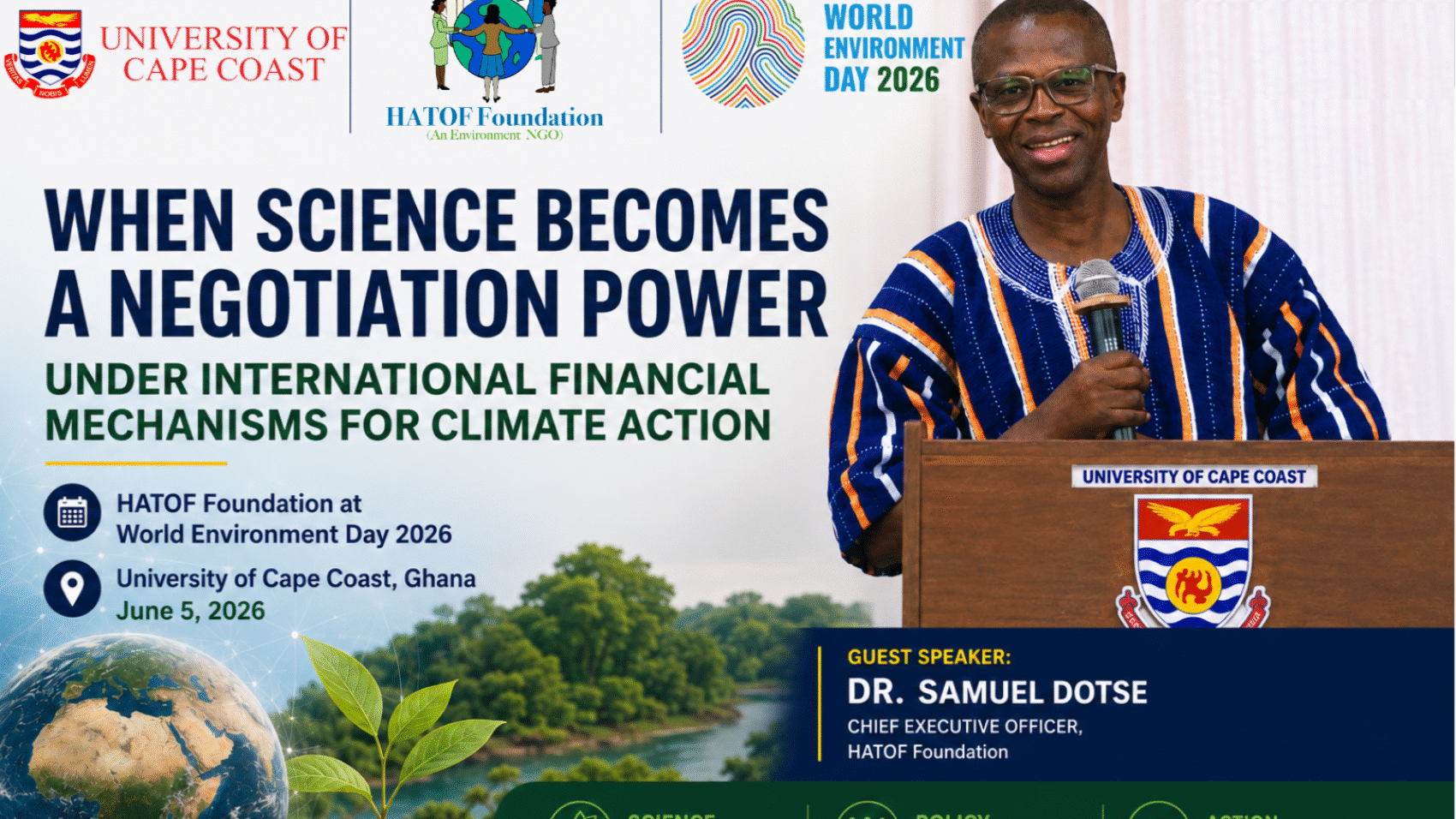
When Science Becomes a Negotiation Power Under International Financial Mechanisms for Climate Action: HATOF Foundation at World Environment Day 2026

University of Cape Coast, Ghana, June 5, 2026: On the morning of World Environment Day 2026, the Department of Environmental Science at the University of Cape Coast (UCC) gathered students, faculty, and guests under one roof to mark the occasion. The theme this year, “A Global Call to Climate Action,” set the tone for a day of honest conversation about where Ghana stands in the global climate story.

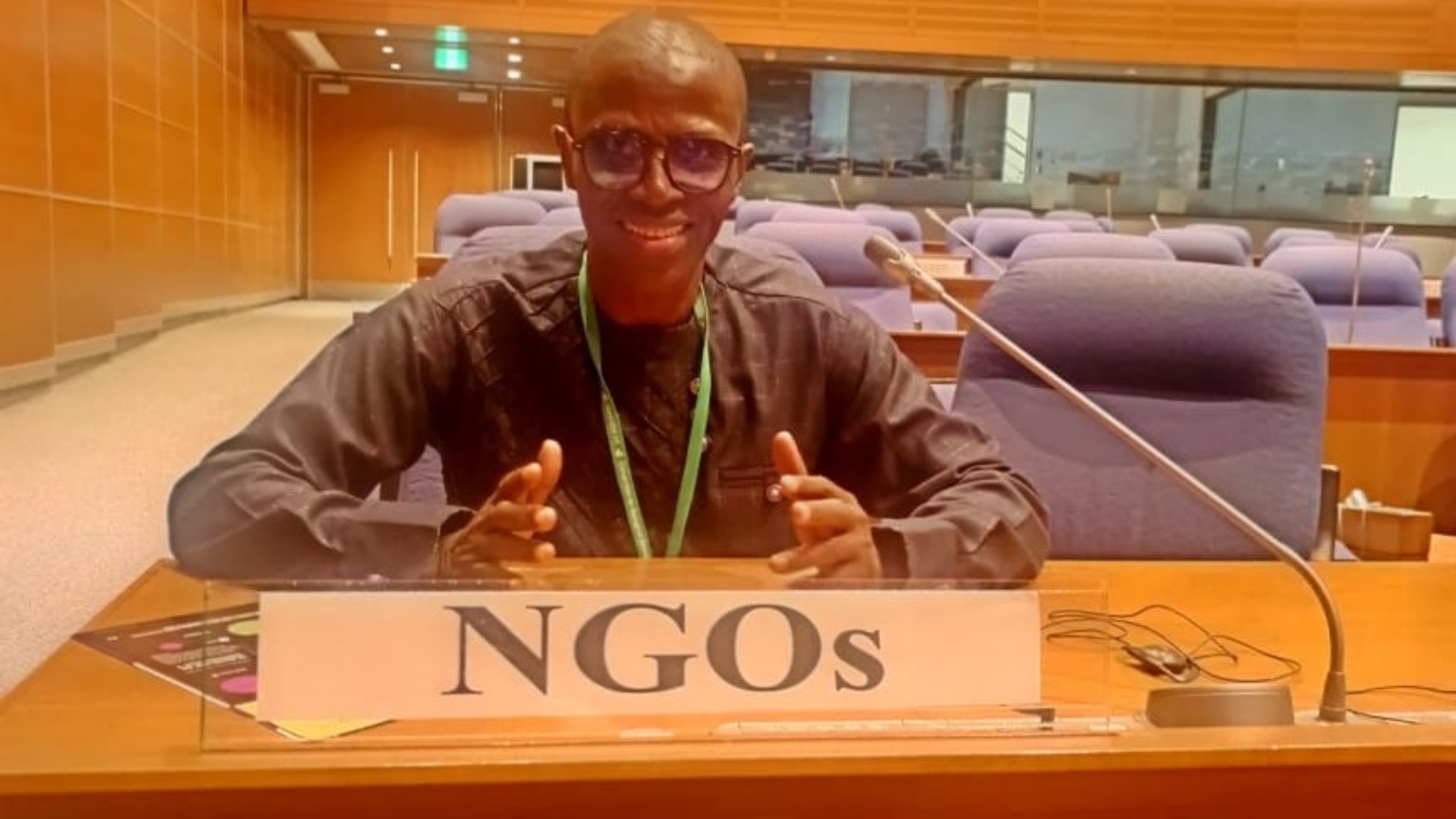
Dr. Samuel Dotse, the Chief Executive Officer of HATOF Foundation, was invited to serve as the Guest Speaker for the symposium. He spoke on the topic: “When Science Becomes a Negotiation Power Under International Financial Mechanisms for Climate Action.”

Dr. Dotse argued that the ability to attract international climate finance from mechanisms such as the Green Climate Fund, the Global Environment Facility, and loss and damage funds does not rest solely on vulnerability, but also on data. Countries with updated inventories, ecosystem valuations, and strong biodiversity datasets walk into negotiations with leverage, while those without them, however climate-exposed, risk being sidelined.

Ghana, he argued, finds itself in a difficult position: although ecologically rich, home to portions of the Upper Guinea Forest, biodiversity-significant wetlands, and a highly vulnerable coastline, it is underrepresented in the datasets that international allocation systems use. That gap, Dr. Dotse said, is becoming costly. A significant part of his address emphasized the inseparability of biodiversity from climate action. He posed three pointed questions: How can farmers build resilience as pollinators decline? How do communities pursue mitigation as forests shrink? How do coastal communities withstand storms as mangroves disappear? These questions anchored the argument that biodiversity data is now required, not a supplement, in climate proposals.

His call to universities was direct: institutions like UCC cannot afford to stay in their traditional academic lanes. They need to become environmental intelligence hubs, generating long-term ecological data, conducting biodiversity mapping, and producing the kind of science that feeds directly into negotiations and project proposals. As he put it, “biodiversity is no longer just for conservation reports. It is the climate negotiation capital.”

Attendees at the symposium included faculty members, the Provost of the College of Agriculture and Natural Sciences, the Dean-Elect of the School of Biological Sciences, and students from across departments, including Environmental Science, Civil Engineering, Oil & Gas, and Coastal Management. An inter-hall debate, drawing participation from nine (9) UCC halls, gave students a live platform to wrestle with these ideas.

For the HATOF Foundation, the day highlighted the importance of our work, linking science with policy and ensuring policies have the resources needed for action.

Happy World Environment Day.
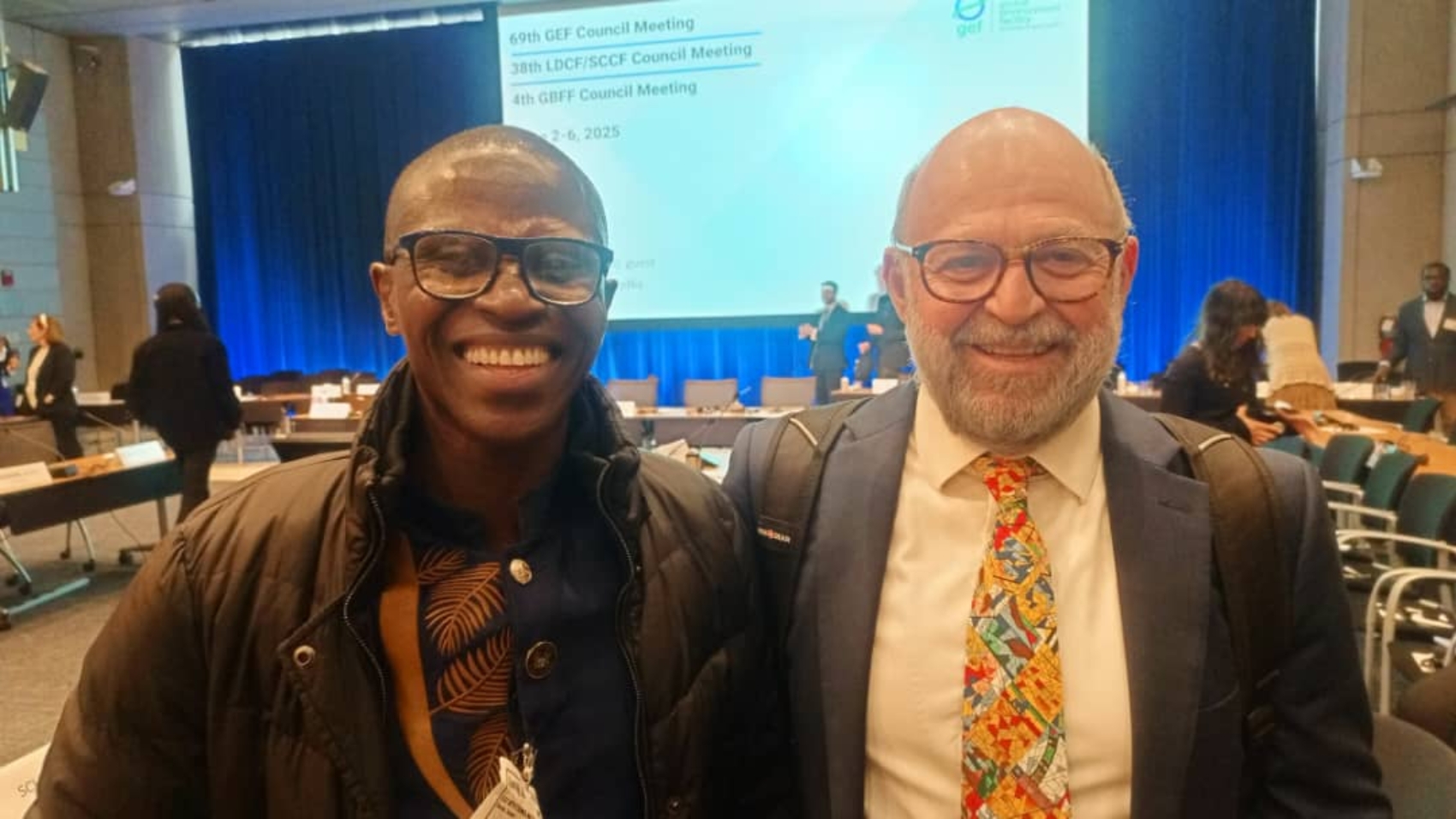
PHOTO-2025-06-04-20-56-16

Dr. Samuel Dotse Champions Climate Action and Financial Mobilization at the 69th GEF Council Meeting in Washington, D.C. USA

Washington, D.C., June 4, 2025 — Global environmental financing is taking center stage this week at
the 69th Session of the Global Environment Facility (GEF 69) Council Meeting, where USD$261
million is being allocated to innovative, transformative programs addressing biodiversity
conservation, pollution remediation, and locally led environmental actions. Amid the high-level
gathering of environmental leaders and decision-makers, Dr. Samuel Dotse, CEO of HATOF
Foundation and Laureate of Distinction in Climate Change, is making strategic waves.
Attending the Council meeting at the invitation of Carlos Manuel Rodriguez, the GEF CEO and Chair
of the Secretariat, Dr. Dotse is actively advocating for ambitious climate financing, forging
important international partnerships, and elevating Ghana’s visibility within the global
environmental financing dialogue. His presence underscores the importance of inclusive,
transparent, and well-financed environmental governance in addressing both national and global
environmental challenges.
Beyond the Council floor, Dr. Dotse is officially invited to speak at the Climate Investment Funds
(CIF) 2025 Observer Onboarding Workshop at the World Bank Office in Washington, where he will
deliver insights on enhancing transparency in the governing bodies of Multilateral Climate Funds
and the crucial role observers play in strengthening accountability and institutional transparency.
In a series of high-level bilateral meetings, Dr. Dotse is also engaging with the Adaptation Fund
Secretariat, CIF leadership, and Multilateral Accredited Entities and development partners to
secure targeted funding for climate resilience, biodiversity conservation, and sustainable land
management in Ghana.
Out of the $261 million up for disbursement at the Council, $195 million is earmarked for projects
focused on eliminating toxic substances from from cosmetic products and industrial
processes, support collaboration across international waterways, and propel a variety of
locally led environmental efforts, including through microfinance. Additionally, the Global
Biodiversity Framework Fund (GBFF) is considering $26 million in grants to scale up biodiversity
protection efforts and community well-being programs across multiple countries.
Dr. Dotse’s strategic engagement comes at a pivotal time, as the GEF Council reviews progress
toward key global environmental goals and aligns funding strategies with the evolving mandates of
multilateral environmental conventions.


About the Global Environment Facility (GEF):
The GEF is the world’s largest multilateral fund supporting developing countries, including Ghana in
meeting global environmental commitments. It serves as the financial mechanism for several key
environmental conventions, including the UN Framework Convention on Climate Change
Convention, UN Convention on Biological Diversity, Convention to Combat Desertification,
Stockholm Convention on Persistent Organic Pollutants, Minamata Convention on Mercury, and the
Biodiversity Beyond National Jurisdiction (BBNJ). The GEF comprises 186 member countries, and its
Council—made up of 32 representatives from developed, developing, and transitional
economies—meets twice yearly to set policies, review progress, and approve funding for
environmental projects.
About the Global Biodiversity Framework Fund (GBFF):

Launched in 2023, the GBFF supports developing nations in implementing the Kunming-Montreal
Global Biodiversity Framework with strategic focus on strengthening national-level biodiversity
management, planning, policy, governance, and finance approaches. With $202 million already
committed across 41 countries, the GBFF aims to drive national-level biodiversity policies and
planning to meet the ambitious goal of living in harmony with nature by 2050. Ghana is yet to
benefit from the GBFF.

HATOF Foundation at WGDSI-2: Advancing Benefit-Sharing Mechanisms For Digital Sequence Information

DR. SAMUEL DOTSE HAILS THE HISTORIC LAUNCH OF THE CALI FUND FOR BIODIVERSITY


Rome, 28 February 2025 – Dr. Samuel Dotse, the Chief Executive Officer of the HATOF Foundation, has welcomed the historic launch of the Cali Fund, a financial mechanism designed to ensure fair and equitable benefit-sharing from digital sequence information (DSI) on genetic resources.
This groundbreaking move took place on the sidelines of the resumed session of the 16th UN Biodiversity Conference in Rome, setting the stage for a more sustainable and cooperative approach to biodiversity protection.
The Cali Fund is set to receive contributions from private sector entities that use DSI for commercial purposes, representing a transformative shift in how biodiversity is financed. A key feature of the Fund is its commitment to direct at least 50% of its resources to Indigenous and local communities who are important stewards of the world’s biodiversity.
Dr. Samuel Dotse expressed his excitement at the launch, emphasizing the importance of compensating local communities for their ongoing contributions to biodiversity protection: “I am particularly excited about the Cali Fund seeing the light of day at this resumed session. Compensating local communities for their contribution to biodiversity protection is long overdue. With the launch of this Fund, our local communities, which are at the forefront of biodiversity protection, will receive support for their conservation efforts.”
The commitment to channel resources from the Cali Fund to local communities is a significant development in the evolving approach to biodiversity conservation. By securing funds from the private sector, the Fund represents a new frontier of biodiversity finance, ensuring that those closely connected to nature and land receive support for their invaluable role in safeguarding biodiversity for global benefit.
HATOF Foundation reaffirms its commitment to empowering local communities and advancing a more sustainable and suitable future for biodiversity protection.

Hatof-COP27-Egypt-2022

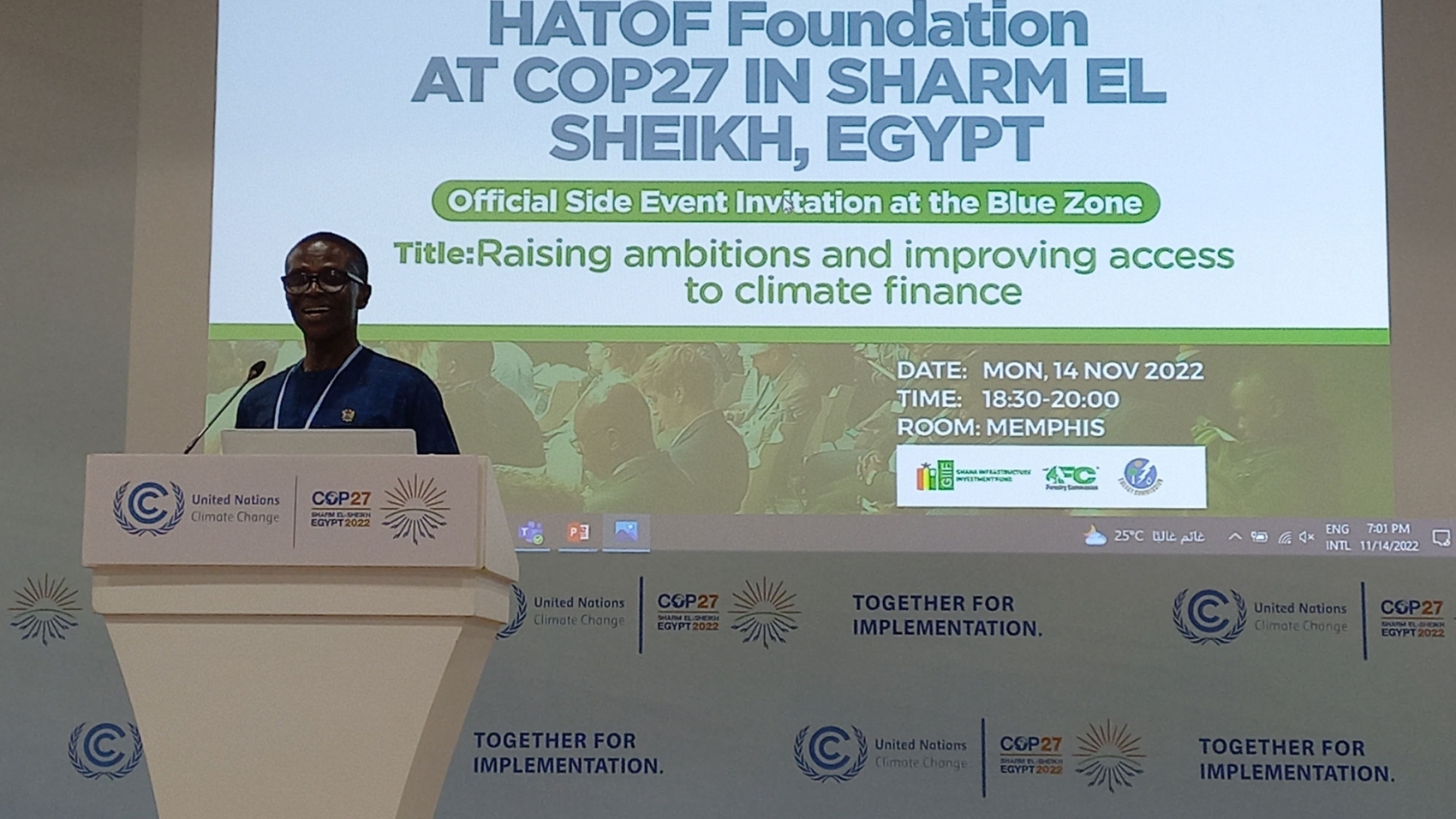
HATOF Foundations holds an official side event on Climate Finance at COP27

On November 14, 2022, HATOF Foundation held its annual official side event on how to mobilize climate finance at scale, raise ambition and improve access to finance on the sidelines of the ongoing 27th United Nations Climate Change Conference in Sharm el-Sheikh, Egypt.

Hatof-COP27-Egypt-2022

The event which was on the theme “Raising ambition and improving access to climate finance” showcased actions on implementation and delivery through information sharing on best practices, innovative and blended finance, financial mechanisms that have enhanced access to finance, and offer space for dialogue and networking with climate finance actors.

Delivering the opening statement, the Chief Executive Officer of the HATOF Foundation, Dr. Samuel Dotse, emphasized the need to continuously finance flows to the continent of Africa, and Ghana in particular to address climate shocks.

He said, “it is unambiguous that continuous financial flow to developing countries is necessary to address mitigation, adaption, technology transfer, and capacity-building needs.”

Meanwhile, the debate for climate finance has not been smoothly discussed in the climate negotiations arena and thus has resulted in financial flow shortfalls.

Dr. Dotse added that “besides efforts towards climate-compatible developments across the continent, concerns around access, inadequacy, imbalance, and unpredictability of climate finance continue to characterize the discussion on finance- thus leading to the decline in financial flows to the continent.”

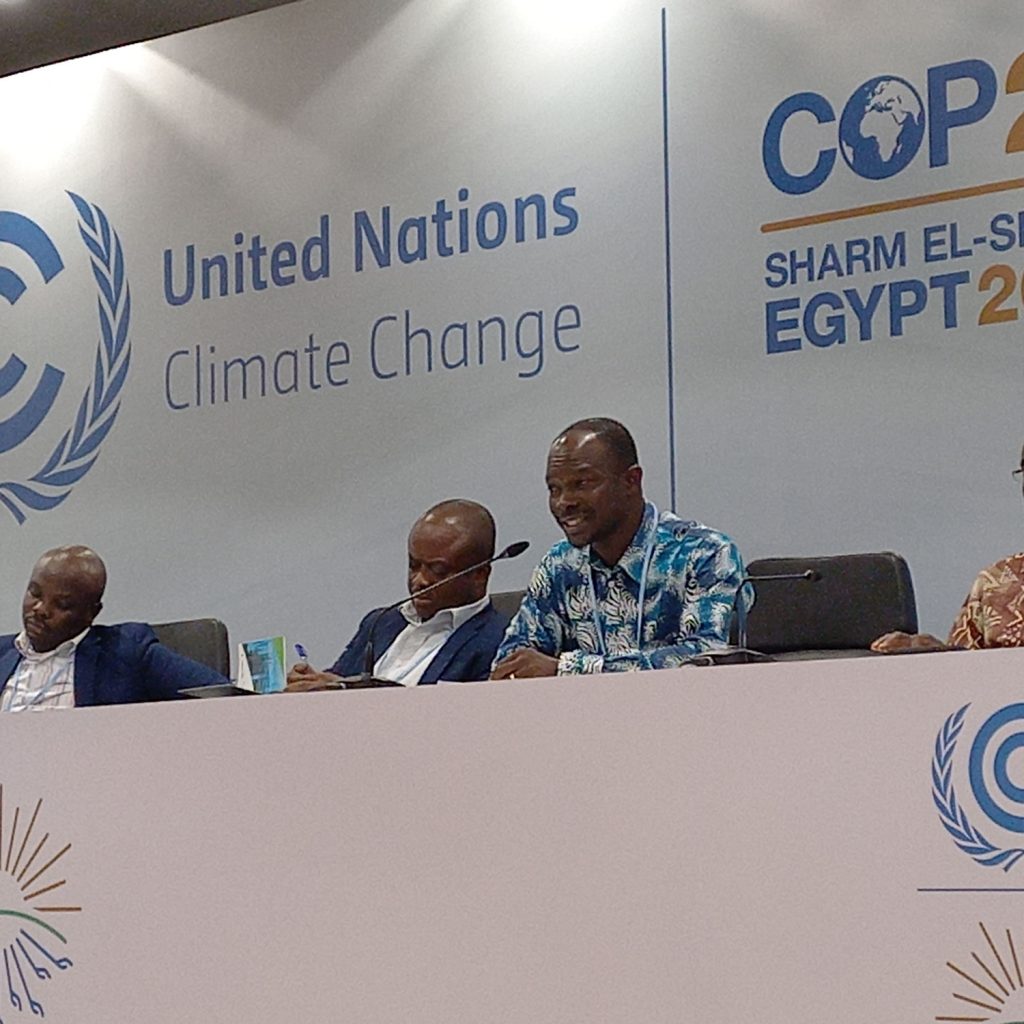
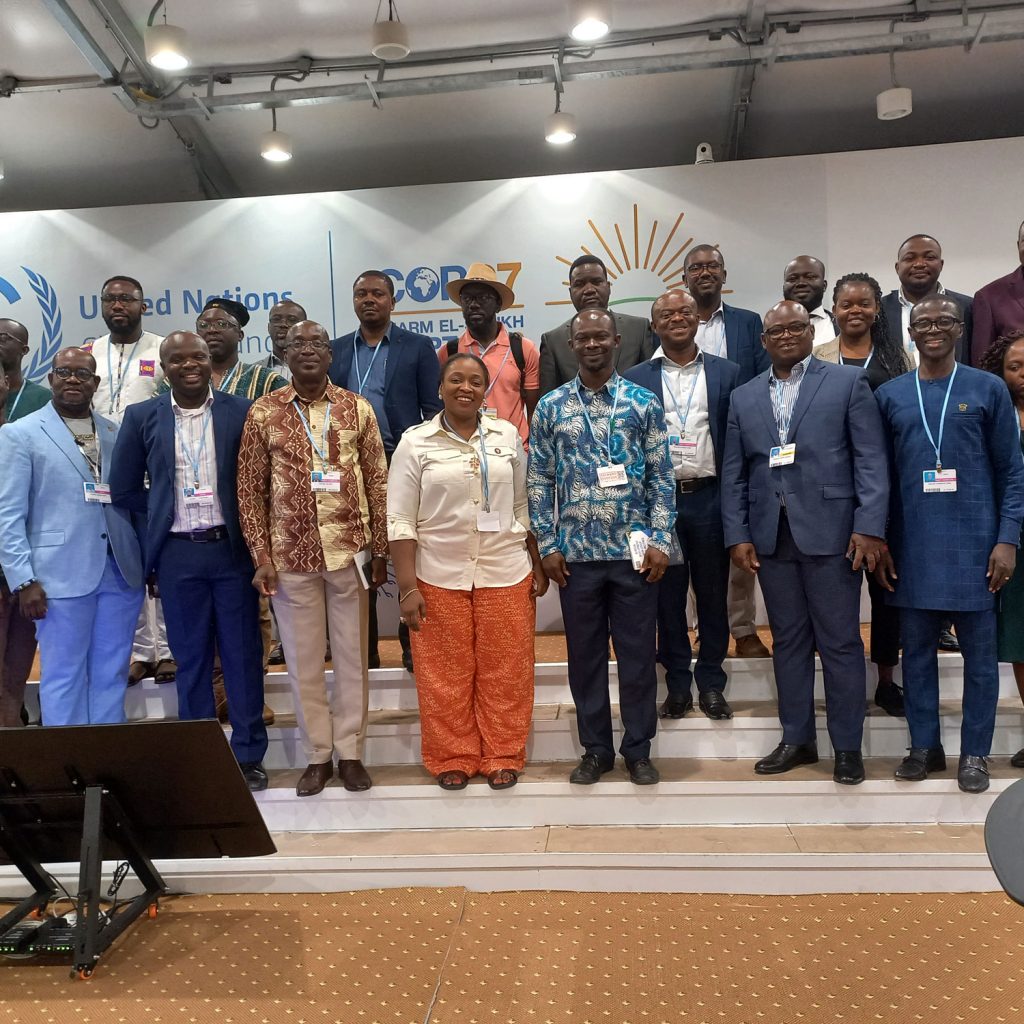
The interactive session, which brought speakers from government institutions, and development partners, gave insight into how to plan, mobilize, access, deliver, and scale up a variety of multilateral funds to address climate change.

Hatof-COP27-Egypt-2022

Speakers include Mr. Stephen Kansuk, Head of Environment and Climate Change, UNDP Ghana; Mr. Foster Aboagye Gyamfi, Principal Economic Officer, Ministry of Finance, Ghana; Mr. Kofi Agyarko, Director, Renewable Energy, Energy Efficiency and Climate Change Department, Energy Commission; Ms. Roselyn Fosuah Adjei, Director, Climate Change Directorate, Forestry Commission; and Mr. Kwadwo Gyan, Risk Manager, Ghana Infrastructure Investment Fund.

Follow the link for a full video on the side event here https://www.youtube.com/watch?v=gPXDE-L4I8k

meta

GREEN CLIMATE FUND APPROVES USD 442,968 FOR HATOF Foundation’s READINESS PROPOSAL.

PRESS RELEASE

GREEN CLIMATE FUND APPROVES USD 442,968 FOR HATOF Foundation’s READINESS PROPOSAL.

The Green Climate Fund (GCF) Secretariat has approved HATOF Foundation’s Readiness Proposal for the amount of USD 442,968 for “Capacity Building and Knowledge Management on Climate Change for Civil Society Organizations (CSOs) in Ghana towards the implementation of the Nationally Determined Contributions.”

The proposal, which was approved on December 3, 2021, marks the first readiness targeting support to CSOs in Ghana and makes HATOF Foundation the first NGO in Africa to have a readiness proposal approved by the GCF.

This GCF Readiness aims to strengthen the capacities of 10 Ghanaian CSO networks to contribute efficiently in the Nationally Determined Contributions planning and implementation processes through:

  • Engaging the National Designated Authority, Direct Access Entities and GCF on project design, selection, budget preparation, implementation, monitoring and evaluation;
  • Developing a CSO-tailored training module on preparing funding proposals to leverage non-state actors’ engagement with the GCF;
  • Developing a five-year Civil Society Climate Change Agenda and Action Plan; and
  • Developing GCF Concept note proposing how this initiative could be up-scaled nationally to facilitate agreement on direction and access to financing.

The Readiness will build on and maximize the efforts of previous and existing support in climate change capacity building related initiatives to ensure that CSOs in Ghana have access to relevant, up-to-date information about climate change trends and risks, receive suitable training and have enhanced knowledge on climate financing and paradigm shift strategies.

Over time, the Readiness support will enhance CSOs technical and institutional expertise to develop and effectively implement low carbon development climate compatible projects and programmes to contribute to the country’s long-term sustainable development.

With Centre de Suivi Ecologique (CSE) as the delivery partner, the GCF has engaged the United Nations Office for Project Services (UNOPS) for grant management support to the Readiness Programme, including the establishment of a grant agreement, performance monitoring and disbursements for the amount of USD 442,968 under the agreement.

The Ministry of Finance, the National Designated Authority of the Green Climate Fund, will provide leadership in implementing the Readiness Programme.

About the HATOF Foundation

The Green Climate Fund is the world’s largest climate fund, mandated to support developing countries raise and realize their Nationally Determined Contributions (NDCs) ambitions towards low-emissions, climate-resilient pathways.

The Readiness and Preparatory Support Programme supports country-driven initiatives by developing countries to strengthen their institutional capacities, governance mechanism, and planning and programming frameworks towards a transformational long-term climate action agenda.

This Readiness is the fifth readiness the GCF has approved for Ghana.